Gardening Tools




Results for Gardening Tools
Gardening tools are the hand-held and long-handled implements used to prepare soil, plant, maintain, and tidy an outdoor growing space. Each one turns physical effort into a specific result: loosening and turning earth, leveling a surface, clearing loose debris, cutting back growth, or protecting the gardener's body during the work. Built around a working head and a handle or frame, they let you apply force exactly where a plant, bed, or patch of ground needs it, with far less strain than doing the same job by hand. Together they make routine cultivation faster, more controlled, and repeatable season after season.
The range spans a few core families. Rakes run from wide landscape and leveling rakes that grade soil and spread topdressing to lighter leaf rakes for surface cleanup, with long handles and heads commonly around 36 inches wide. Garden forks use four or five forged tines to dig, lift, and aerate, while specialty garden tools handle close, precise jobs such as trimming and weeding. Ergonomic accessories round out a kit, with garden gloves to protect the hands and a garden kneeler and seat to spare the knees and back. Typical uses are grading driveways and lawns, breaking up and aerating beds, clearing leaves and clippings, and detailed planting or pruning.
Five things decide what you need:
- Task: leveling ground, digging and aerating, trimming growth, and protecting your hands or knees each point to a different tool.
- Garden scale: large lawns and driveways reward wide or tow-behind rakes, while raised beds and containers call for hand tools and forks.
- Soil type: rocky or clay-heavy ground needs tougher steel heads and shock-absorbing handles; loose, worked soil is far more forgiving.
- Handle material: fiberglass stays stable in damp conditions and dampens vibration, hardwood absorbs shock, and aluminium keeps the weight down.
- Comfort: padded grips, adjustable handle heights, and a kneeler or seat matter most during long or repetitive sessions.
Browse the full gardening tools collection to build a kit around your soil, your space, and the jobs you do most, or explore the complete rake lineup that covers the heaviest ground work.
Gardening Tool Types at a Glance
The table below sorts the main tool families by what they do and where they earn their keep, so you can see at a glance which group fits the work in front of you.
| Tool Type | Core Job | Where It Shines | Handle & Reach | Selection Note |
|---|---|---|---|---|
| Rakes (landscape, leveling, leaf) | Grading, leveling, clearing | Open ground, driveways, lawns, ponds | Long-handled, some tow-behind | Pick a leveling rake for topdressing and seedbeds, a landscape rake for soil and gravel, a leaf rake for light cleanup. |
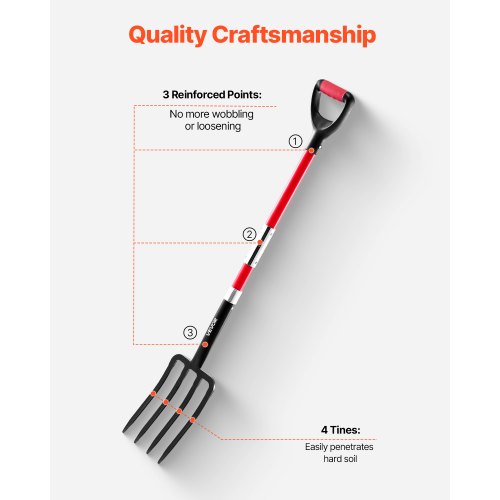
| Garden forks | Digging, lifting, aerating | Bed soil, compost, root crops | Mid-length, foot-driven | More tines move more soil; fewer, thicker tines bite harder into clay and rocky ground. |
| Specialty garden tools | Trimming, weeding, precision work | Individual plants, borders, ponds | Hand-held or powered | Powered trimmers clear volume fast; manual hand tools give the control close work needs. |
| Garden kneeler & seat | Supporting knees and back | Any low, ground-level task | Low fold-out frame | A convertible frame flips to a stool; a wider, thicker pad pays off on long sessions. |
| Garden gloves | Protecting hands and grip | Any task, thorny or dirty | Worn, not handled | Leather for thorns and pruning, coated fabric for dexterity in fine, delicate jobs. |
VEVOR Gardening Tools for Every Season, Soil Type, and Outdoor Task
Are you looking for the best equipment for planting, raking, excavating, or weeding? The gardening tools from VEVOR are designed to meet the needs of experienced landscapers and home gardeners alike. VEVOR provides you with everything you need to tackle a variety of outdoor challenges with a single, reliable source, including ergonomic garden gloves, a garden kneeler and seat for comfortable extended sessions, and specialty garden tools designed for precise work.
Choosing the Right Gardening Tools by Tool Type and Application
Understanding each tool's function is the first step in choosing the best gardening tools. Choosing the right equipment for the job guarantees better results, less physical strain, and a more effective use of your time, whether you are tending container plants on a balcony, growing in a raised bed, or managing a large lawn. With a wide range of products across all key tool categories, VEVOR lets gardeners customize a kit to meet their unique requirements.
Gardening Rakes – Clearing, Leveling, and Lawn Care Made Easier
The use of gardening rakes goes far beyond leaf cleaning, making them among the most adaptable tools in any gardener's toolbox. The best option for leveling garden beds after tilling, breaking up compacted soil, and adding fertilizer or compost to the top layer of soil is a conventional bow rake with stiff steel tines. It can handle stones, clods, and heavy rubbish without bending or losing shape under pressure thanks to its strong structure.
A fan or leaf rake with flexible tines works better on lawn surfaces to gather light organic materials, falling leaves, and grass clippings without rupturing the turf. These rakes are wider, lighter, and made to swiftly cover ground during post-mowing or fall cleanup.
The balanced handles and reinforced tine connections of VEVOR's gardening rakes lessen fatigue after prolonged use. Choosing the right rake type can save a lot of time, whether you are raking a large lawn or a small flower bed. To effectively meet every seasonal requirement, think about maintaining a fan rake and a bow rake in your shed, one for surface waste and one for soil work. Both varieties are affordable without compromising durability, thanks to VEVOR's range.
Garden Forks – Digging, Aerating, and Turning Soil With Precision
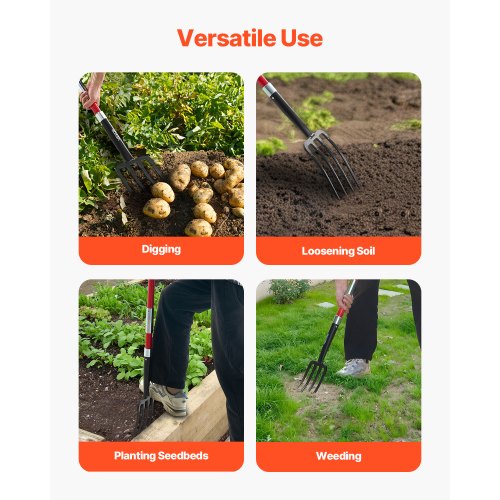
When working with dense, clay-heavy, or root-filled soil, garden forks are an essential tool for serious gardeners. A garden fork uses four or five tines to pierce the soil, loosening it without completely disturbing the structure, in contrast to a spade, which slices through the ground. Because of this, forks are an excellent tool for turning compost piles, aerating existing beds, and lifting root vegetables like potatoes or parsnips without cutting through them.
The most popular kind, a digging fork, has strong, square tines that are good for breaking up compacted ground and pulling weeds at their roots. For working in more confined areas between plants or along the edges of raised beds, a border fork, which is lighter and slightly smaller, is perfect.
For optimal penetration and resistance to bending under stress, VEVOR forges its garden forks from high-carbon steel. To keep the tines sharp over time, even in clay-rich or rocky soils, they are heat-treated. Consider the weight, thickness, and number of tines when purchasing a garden fork. While lighter models lessen effort over longer periods, heavier forks move more soil per stroke. When you combine a high-quality VEVOR garden fork with its matching spade, you have a digging team that can tackle almost any type of ground condition.
Specialty Garden Tools – Precision Instruments for Targeted Tasks
A big rake or fork is not necessary for all gardening tasks. Specialty garden tools bridge the gap between extensive cultivation and meticulous, focused work. This group includes soil scoops, weeding knives, hand trowels, and transplanting dibbers, all of which are designed to perform tasks that larger instruments cannot do as precisely.
For example, a transplanting trowel with measuring markings reduces uncertainty about planting depth for bulbs, seedlings, or annuals. You may remove tap-rooted weeds, such as dandelions, from between paving stones or along borders by using a serrated weeding knife to cut them just below the soil surface.
With the same attention to material quality as their larger counterparts, VEVOR's specialty gardening tools are made. These little tools withstand frequent use in moist soil thanks to their solid-socket design and rust-resistant coatings. Adding a variety of specialty garden tools to your basic kit can shift your gardening style from general upkeep to more precise, focused cultivation, the kind of accuracy that keeps plants healthier and garden beds looking well-maintained throughout the growing season.
Garden Tool Sets – A Complete Kit for Every Gardening Stage
Garden tool sets offer good value and immediate readiness for new gardeners or those wishing to update an outdated toolset. A well-curated set typically includes a trowel, hand fork, transplanting spade, weeder, and sometimes a carry bag or organizer, covering the essential operations of planting, weeding, and soil preparation in one purchase.
Purchasing a set is often preferable to buying individual tools because the instruments in the same set share the same handle material, grip design, and weight distribution, making switching between tools feel seamless rather than jarring. Because matched sets frequently include specially designed racks or rolls, storage is also easier.
With selections ranging from small three-piece hand tool collections to complete full-size kits ideal for handling larger outdoor spaces, VEVOR's garden tool sets cater to both novice and expert gardeners. When compared to buying the same instruments separately, each set's price offers noticeable savings. A VEVOR gardening tool set is a useful, long-lasting place to start, whether you're giving it to a new homeowner or retiring that disorganized assortment of outdated tools.
Matching the Tool to the Job
Once you know the families, the next question is which tool suits a specific job and what to check before you buy; this table pairs common garden tasks with the right tool type, the spec that matters most, and the pitfall to avoid.
| Garden Task | Best-Suited Tool Type | Key Spec to Match | What to Watch For |
|---|---|---|---|
| Leveling a lawn before seeding | Lawn leveling rake | Ground-plate width and handle length | A wider plate covers open lawns faster, but an adjustable handle saves your back on long passes, so check the height range, not just the plate size. |
| Grading or smoothing a gravel driveway | Tow-behind drag harrow | Working width versus your tow vehicle | Match harrow width to your ATV or tractor; too wide drags hard, wanders on turns, and needs more pulling power than a small mower can give. |
| Breaking up and aerating bed soil | Digging fork or broadfork | Tine count and handle material | Five fiberglass-handled tines flex less in clay and pass on less shock than a single-piece steel shaft, which matters most in dense or stony ground. |
| Trimming buds, leaves, or harvest | Specialty bud leaf trimmer | Bowl size and manual versus powered | Electric, adjustable-speed units clear volume quickly; manual bowls give more control on delicate flowers, so match the choice to your batch size. |
| Long sessions at ground level | Garden kneeler and seat | Pad width and frame strength | A convertible frame doubles as a stool; if you lean on the side handles to stand, confirm the frame and handles are rated for your weight. |
Why Material and Ergonomics Matter When Buying Gardening Tools
The greatest gardening tools do more than just complete tasks; they safeguard your body during extended workdays and last for years of seasonal use. The two elements most frequently disregarded when making a purchase are material quality and ergonomic design, yet they have the greatest impact on how comfortable and effective your time in the garden is.
Tool Materials – Durability Across All Weather and Soil Conditions
The performance of gardening tools across different soil types, weather conditions, and usage frequency depends on the materials they are made of. Although steel is the most common material for tool heads, not all steel performs the same. For digging tools that come into contact with rocky or deep clay soils, high-carbon steel is the better option since it is tougher and retains a sharper edge longer than regular mild steel. Even though many stainless steel grades are slightly softer, they resist rust and corrosion very well, which is a significant benefit for gardeners who frequently leave tools outside or in areas with heavy rain.
Handling materials is equally important. Although hardwood handles, especially ash, offer a high strength-to-weight ratio and effectively absorb vibration, they occasionally need to be oiled to prevent drying and breaking. Fiberglass handles perform consistently regardless of humidity levels, require minimal maintenance, and are highly moisture-resistant and generally non-absorbent. Adding ergonomic rubber grips to fiberglass or aluminum shafts greatly reduces hand fatigue during repetitive operations like hoeing or raking.
From the cushioned handles on their hand tools to the forged steel heads on their gardening tools, VEVOR integrates these material considerations into every product category. A solid-socket or strapped connection at the neck is significantly more durable than a straightforward tang-and-ferrule fitting, which can loosen or snap under lateral stress if overloaded or misused. Always verify the head attachment mechanism when assessing gardening tools. Selecting high-quality materials in advance reduces the expense and inconvenience of premature replacement.
Ergonomic Accessories – Garden Gloves, Kneeler, and Seat for Comfortable Gardening
In gardening, ergonomics goes beyond the equipment itself; it also includes the supportive and protective accessories that enable long workdays. The most basic protective gear is garden gloves, which provide adequate dexterity for delicate tasks while protecting the hands from blisters, thorns, soil-borne germs, and chemical residues. While thicker leather gloves are better suited for heavy pruning or handling hard materials, nitrile-coated gloves provide grip and light abrasion, and light cut resistance.
One of the most undervalued ergonomic additions to a gardener's toolbox is a garden kneeler and seat. Over time, kneeling directly on concrete or hard ground can place significant strain on the lower back and knee joints. While models that convert to a low seat offer an alternate resting position for work that doesn't require ground-level access, a padded kneeler instantly reduces pressure on the knees. Many include side handles that greatly facilitate getting back up, which is very helpful for elderly gardeners or people recuperating from joint pain.
Everyday usability is considered in the design of VEVOR's garden gloves, garden kneeler, and seat alternatives. The kneeler frames feature powder-coated steel for stability and corrosion resistance, and the gloves' reinforced fingertips prolong their useful life. Purchasing the proper ergonomic accessories for your gardening tools is essential; it may mean the difference between having a fun afternoon in the garden and waking up the following morning with a sore, stiff body.
Best-Seller Comparison
These five popular picks with the main tool families side by side so you can see how size, material, and operation differ before you choose.
| Product | Tool Type | Working Size | Head/Frame Material | Operation | Key Feature | Best For |
|---|---|---|---|---|---|---|
| Drag Harrow, 8 ft Tow-Behind | Tow-behind drag harrow | 8 ft working width | Steel with 72 in chain | Towed by ATV, UTV or tractor | Adjustable leveling bars | Widest coverage here; grading long driveways and paddocks in the fewest passes. |
| Landscape Rake, 36 in Aluminum Head | Landscape / lake weed rake | 36 in head, 75 in handle | Aluminum head | Hand push and pull | Doubles as a lake and pond weed rake | Only water-capable rake here; loosening soil on land and clearing weed in ponds. |
| Garden Kneeler and Seat, 8 in Pad | Kneeler and seat | 8 in wide EVA pad | Powder-coated steel, EVA pad | Folds flat, flips to a stool | Two tool bags and side handles | Only comfort tool here; kneeling and resting through long ground-level jobs. |
| Garden Fork, 5-Tine, 41 in Handle | Digging / spading fork | 41 in length, 5 tines | Forged steel | Hand and foot driven | Y-grip metal handle | Only true digging tool here; turning soil, compost and root crops by hand. |
| Lawn Leveling Rake, 36 x 10 in Plate | Lawn leveling rake | 36 x 10 in plate, 78 in handle | Steel plate and handle | Hand push and pull | Extended handle for topdressing | Finest leveling control here; smoothing topdressing on lawns, turf and seedbeds. |
Why Choose VEVOR Gardening Tools for Your Outdoor Space?
With premium materials and ergonomic design, VEVOR's gardening tools cover every activity, from accurate planting to soil preparation. You receive a comprehensive solution at a reasonable cost with choices including gardening rakes, garden forks, specialty garden tools, garden tool sets, garden gloves, and a garden kneeler and seat. Explore VEVOR's entire inventory now to find the ideal tools to boost garden productivity and enjoyment throughout each season.
FAQs
What gardening tools should a beginner buy first?
To begin, use a hand trowel, a garden fork, and a rake for planting, cleaning debris, and loosening the soil. As you develop your habit, adding a garden kneeler and seat early on, along with a pair of garden gloves, will help make sessions much more comfortable.
Are VEVOR garden tool sets suitable for heavy-duty use?
Yes, VEVOR garden tool sets are suitable for both light maintenance and more demanding tasks, such as breaking up compacted soil or working through thick clay, thanks to high-carbon or stainless steel heads and stronger handle connections.
What is a garden kneeler and seat used for?
A garden kneeler and seat is a multipurpose tool you can use as a low seat or flip it to create a padded kneeling surface that protects your knees. Side handles make it easier for you to stand back up after long sessions, which can help reduce strain on your joints.
How do I maintain my gardening tools to extend their lifespan?
After each use, clean the tools of any dirt, make sure they are completely dry before storing, and lightly oil the metal heads to prevent rust. Periodically treating wooden handles with linseed oil helps keep them from breaking. Tool life is greatly increased by proper storage in a dry shed.
What is the difference between a digging fork and a border fork?
The longer, thicker tines of a digging fork are ideal for lifting root crops and breaking up huge expanses of soil. Smaller and lighter, a border fork is made to function in tight areas, such as between existing plants or along narrow bed boundaries, without damaging nearby roots.
Can you recommend durable gardening tools for small spaces?
For small spaces, choose compact, hard-wearing tools: a short digging garden fork for raised beds, a hand trowel for containers, and a narrow leveling rake for tight lawns. Forged steel heads and fiberglass handles hold up to frequent use without taking much storage room.
How do I choose the best garden tool set for my yard?
Match the set to your yard's main jobs and surfaces. A small plot needs hand tools for planting and weeding, while a larger lawn calls for long-handled rakes and leveling tools. Check that the handle material and head steel suit your soil and how often you will use them.
Can you recommend durable garden tools for frequent use?
For frequent use, prioritise forged or high-carbon steel heads and solid-socket handle connections, which resist bending and loosening. Fiberglass or ash handles withstand repeated strain better than low-grade alternatives. A garden kneeler and seat also helps you keep working comfortably through longer, more regular sessions.