Dust Collector Accessories


Results for Dust Collector Accessories
VEVOR has all the dust collector accessories, connection configurations, and application specifications you need. Dust collection hoses with different diameters and lengths can accommodate different tool connections and system layouts. The wet-dry vac and wet-dry shop vacuum accessories are designed for workshop vacuum systems that can handle both dry dust and liquid waste. We also have woodworking dust collector accessories for collecting chips, shavings, and fine dust from woodworking machinery. VEVOR ensures every dust collector accessory works well with standard dust-collection system fittings and lasts a long time.
VEVOR Dust Collector Accessories – For Workshop Dust Extraction System
Are you adding cyclone separation to an existing dust extraction system to make filter maintenance easier? When you use VEVOR dust collector accessories, you do not have to deal with the performance issues that come with collection system parts. If you pick the wrong dust collector accessories, the system won't collect as much dust. You will have to clean and replace the filters more often. If you use the right dust collector accessories, the system will maintain suction and filtration even after long days of use in the workshop.
Choosing Dust Collector Accessories by Accessory Type and Application
Picking dust collector accessories for a workshop or system change mainly depends on two things: the type of part you need and how you plan to use it. Finding the right type of dust collector accessory to address the existing system's performance gap or expansion needs is key to ensuring the upgrade improves collection efficiency. Each dust collector accessory category handles a different function in the dust collection system, such as separation, conveyance, filtration, or connection.
Cyclone Dust Separators for Pre-Separation and Filter Life Extension
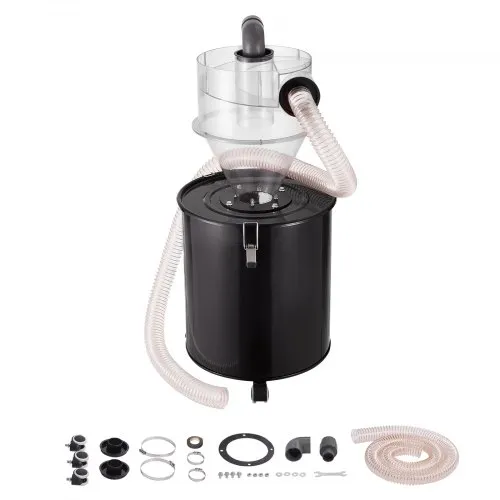
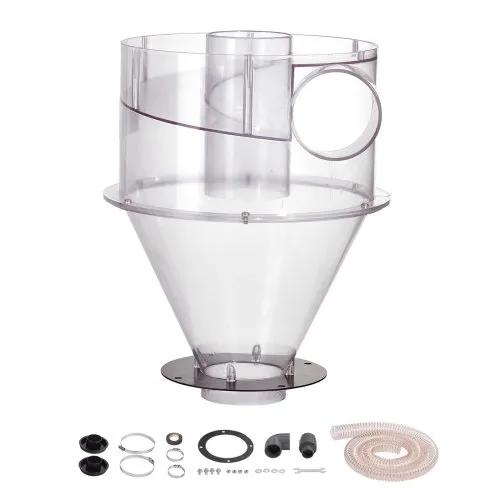
Cyclone dust separators and cyclone dust separator kits are the most useful single upgrade for any existing dust extractor or woodworking dust collector. They separate most of the debris before it gets to the main collection filter and put it in a separate collection bin using centrifugal force. From the tool or hose input to the main dust collector or wet dry vac, there is a cyclone dust separator.
The rotating airflow pattern inside the cyclone chamber throws heavy chips, shavings, and coarse dust particles against the cyclone wall and down into the collection bin below. The cleaner air stream continues to the main collector filter. In many setups, the pre-separation removes about 90% of the waste volume from the airstream before it reaches the main filter. It makes filter cleaning and replacement much less frequent than it would be with a high-volume woodworking dust collector that does not use cyclone pre-separation.
It is possible to add a cyclone dust separator to an existing dust extractor or wet-dry shop vacuum without having to buy each fitting and adapter separately. That's because the kit includes the cyclone body, inlet and outlet fittings, collection bin lid adapter, and connection hardware. Cyclone dust separators come with inlet and outlet port diameters that match those of standard dust collection system hoses. The separator body capacities also differ to accommodate varying debris volume rates, from light hobby workshop use to high-volume production woodworking environments.
Dust Collection Hoses for Tool-to-Collector Connection and Airflow Performance
It is the dust collection hoses' diameter, length, flexibility, and wall construction that directly affect airflow and suction at each tool connection point across the workshop. A dust collection hose width that is too small limits airflow, lowering the suction velocity at the tool port below the level required to collect chips. It allows debris to escape into the workshop air rather than being drawn into the collection system.
For VEVOR dust collection hoses, you can choose from the standard diameter sizes used by woodworking dust collectors and wet-dry shop vacuum systems. The flexible corrugated hose construction makes it easy to move them around machinery and between tool positions without kinking or blocking airflow. Antistatic dust-collection hoses greatly reduce static charge that builds up in plastic hose walls when moving dust and chips quickly. It prevents static discharge events and dust from sticking to the inside of the hose, as non-antistatic hoses do during long woodworking dust collection operations.
Wet Dry Vac for Dual-Duty Workshop Vacuum System Capability
Wet dry vac and wet-dry shop vacuum accessories make workshop vacuum systems better at picking up liquid waste, coolant, and wet debris. With a wet-dry shop vacuum dust collector accessory kit, you can get foam sleeve filters that can collect liquids instead of the normal dry paper filter cartridge. The kit also includes floor squeegee nozzles, liquid pickup tubes, and drain port plugs, making the vacuum suitable for collecting and releasing wet waste.
Dust collector accessories for wet-dry vacs used with dust extractors include special nozzles and wand configurations for collecting fine dust in tight spaces. Crevice tools for cleaning inside machinery and brush nozzle attachments for collecting surface debris without scratching the surface. The extension wand has sections that extend the tool's reach for cleaning tasks above and below machinery.
The wet dry shop vacuum accessories are designed to fit the port diameter and thread specifications of standard wet-dry vac bodies. It ensures safe, airtight connections at every dust collector accessory interface, maintaining full suction performance without leaks. For woodworking shops, where the dust extractor collects dry chips and shavings during machining, and the wet/dry vac cleans up between sessions. Having a coordinated range of compatible dust collector accessories that can handle both dry dust collection and wet cleanup is essential. It reduces the number of separate vacuum systems and dust collector accessories the shop needs to maintain.
Evaluating Dust Collector Accessories by Compatibility and Features
After choosing the right dust collector accessory type for the workshop application and system upgrade need, it is time to see whether it works with the current dust collection equipment. The operational features of each dust collector accessory ensure that the chosen parts fit together correctly and deliver the desired performance.
Wet Dry Shop Vacuums for Compatibility with Port Dimensions
It is important that dust collector accessories work with the right dust extractor, woodworking dust collector, or wet-dry shop vacuum. That is what determines whether the dust collector accessory fits correctly, keeps an airtight seal at all interfaces, and delivers the rated airflow performance in the system.
The dust collector accessory list includes inlet and outlet port diameters, thread types, and fitting configurations to ensure it works with standard dust extractors. There are also adapter fittings in the range to make it easier to connect parts with different diameters. The second dimension requirement for a cyclone dust separator kit is that it must be compatible with the collection bin or drum into which it directs debris.
The separator lid adapter must match the drum opening diameter and rim profile of the collection container to ensure an airtight seal that maintains suction in the separator. The size of the tool's dust port helps determine whether the hose can connect directly to it or requires a reducer fitting. It also determines whether the hose's inner diameter is large enough to carry the tool's chip and shaving volume without clogging during high-feed-rate machining operations.
Operational Features with Airflow Performance and Wet Dry Vac Filtration Capability
The operational features of dust collector accessories determine how well they perform within the dust collection system. Such features also determine how they affect the overall performance of the workshop extraction setup for suction, filtration, and debris handling. The main performance criterion for choosing a cyclone dust separator and cyclone dust separator kit is the separator's efficiency. That is the percentage of incoming debris mass that it removes from the airstream before it reaches the main collector filter.
Higher separator efficiency directly leads to longer periods between main filter cleanings and lower total filter replacement costs over the system's service life. When choosing a separator and hose, you have to weigh the performance trade-off between separation efficiency and collection capacity. That is because longer hose runs and more system components add resistance, reducing suction at the tool connection point. It means the motor and impeller of the dust extractor have to work harder to maintain the airflow speed required for chip and dust capture.
Shop VEVOR Dust Collector Accessories for Every Accessory Type and Workshop Application
VEVOR offers all the dust collector accessory types, port sizes, separation efficiency rates, and filtration configurations you need. Every item in the range of dust collector accessories is designed to work well with other systems, last a long time, and handle the heavy debris loads of daily workshop use. That includes cyclone dust separators and cyclone dust separator kits, dust collection hoses, wet-dry vac accessories, and woodworking dust collector parts. Check out the entire range of dust collector accessories to find the right parts for maintaining, upgrading, or adding to your workshop system.
FAQs
How does a cyclone dust separator reduce filter maintenance on a dust extractor?
There is a cyclone dust separator between the tool inlet and the main dust extractor. It uses centrifugal force to remove most chips, shavings, and coarse dust from the airstream before it reaches the main collector filter. The main filter does not have to be cleaned as often and can go longer between replacements.
What diameter dust collection hose do I need for my woodworking tools?
The diameter of the dust collector accessory you choose will depend on the tool's dust port size and the airflow. Bigger woodworking tools usually have larger dust ports, which means the hoses that connect to them need to be bigger, too. Smaller portable tools have smaller-diameter ports to accommodate lower debris volumes.
What is the difference between a wet-dry vac and a standard dust extractor for workshop use?
When working with wood or other dry materials, a dust extractor is best for collecting dry dust and chips. Some dust collector accessories feature filter systems that can capture dust particles as small as sub-micron particles. The same vacuum body can switch between collecting dry dust and liquid spills with interchangeable filter configurations.