Tow Chain









Results for Tow Chain
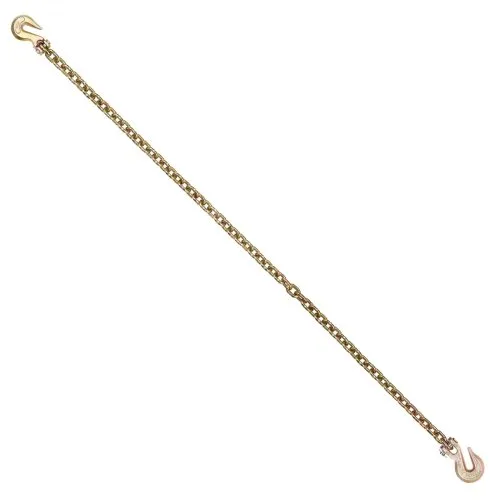
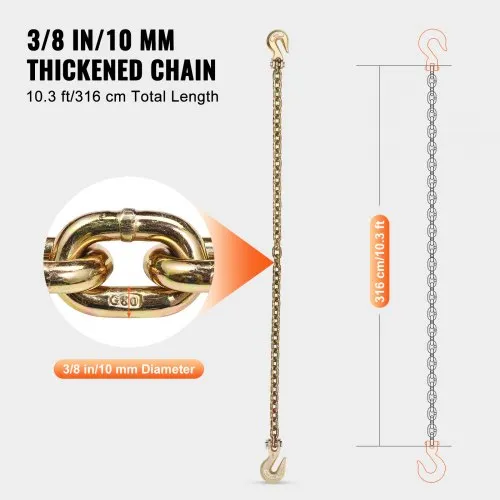
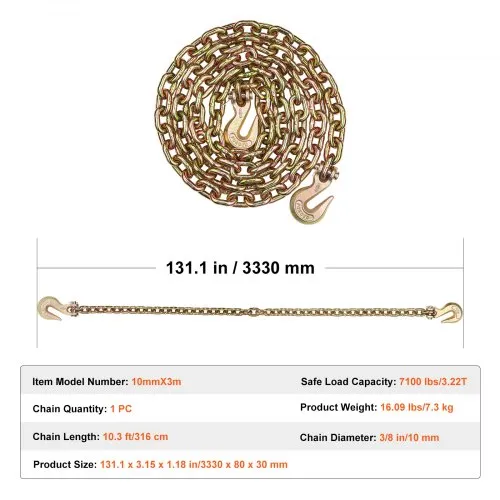
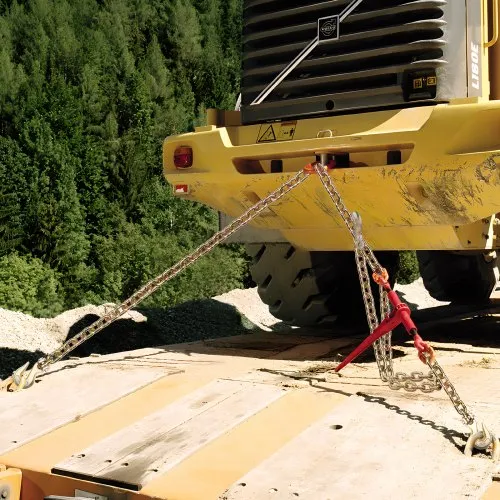
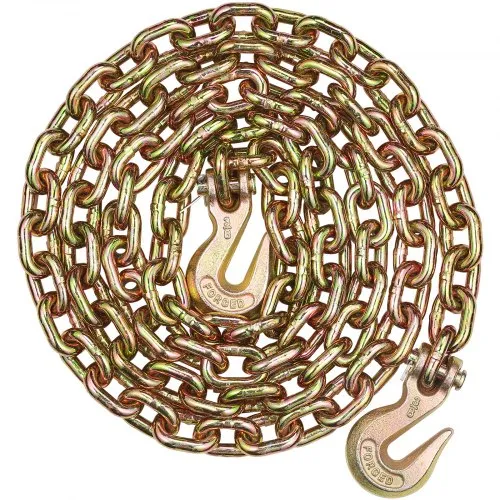
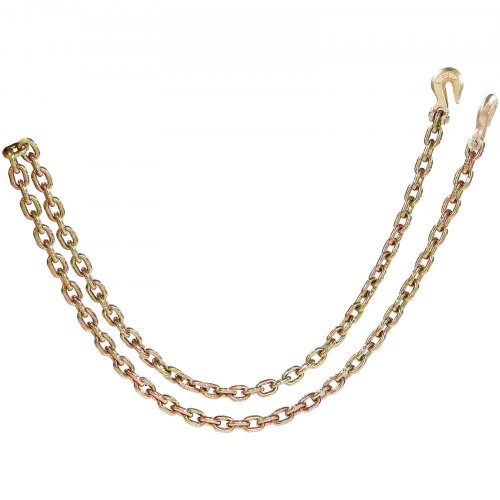
For towing, recovery, and securement of trucks, trailers, and heavy machinery, VEVOR's tow chains offer Grade 80 strength. Choose a small 3/8 inch x 10.3 ft tow chain for lighter-duty tasks, or G80 tow chains with Clevis grab hooks for quick use. For dependable strength under high loads, each chain is constructed from hardened alloy steel. VEVOR provides tow chains graded and scaled for almost any towing or securement application, from weekend haulers to large fleets.
VEVOR Tow Chains: Grade 80 Recovery and Securement Chains for Trucks and Trailers
Do you require a trustworthy pulling chain for load securement, recovery, or towing? Not every chain is designed to withstand the strain of anchoring large loads or dragging a stranded car. For a good strength-to-weight ratio, VEVOR's tow chains are made of Grade 80 alloy steel. They come in a variety of sizes, from a small 5/16 inch x 9.84 ft tow chain set up to longer, heavier-duty combinations for trucks, trailers, and industrial equipment.
Choosing Tow Chains by Grade and Chain Configuration
Not every tow chain has the same size or rating. Configuration and grade influence your decision.
Grade 80 Tow Chains for Maximum Strength
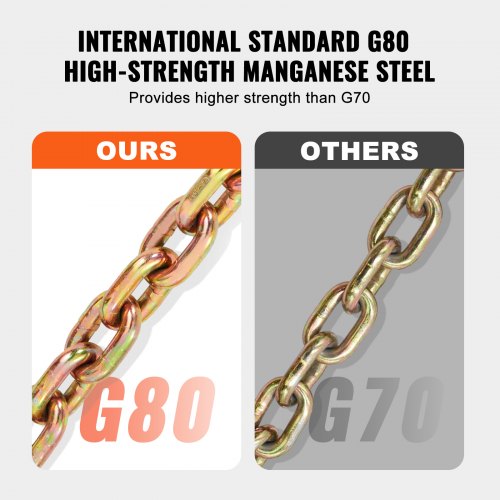
Grade 80 is the industry standard for towing and lifting applications, and compared to lower-grade Grade 30 or Grade 43 chains often used for general purposes, Grade 80 tow chains offer a noticeably higher strength-to-weight ratio. Because of its higher grade, a Grade 80 chain can support larger weights while weighing less overall, which is important when handling or storing chain frequently in a toolbox or truck bed.
The alloy steel construction and heat-treatment process of Grade 80 transport binder chains, a related product often offered with comparable towing equipment, give both products high working load limits and wear resistance under repetitive stress. Grade 80 is now the norm for expert towing, recovery, and transit security in part because of this unified manufacturing standard.
In addition to their sheer strength, Grade 80 links are easily distinguished from lower-grade chains at a glance because of their characteristic octagonal link design. Choosing Grade 80 over a lower-rated option offers a significant additional safety margin without significantly increasing weight or cost for anyone who frequently tows cars, hauls equipment, or secures large loads.
3/8 Inch Tow Chains for Heavy Hauling
3/8 inch tow chain sizing offers a strong working load limit for larger towing and recovery tasks while remaining manageable to handle and store in a truck bed or trailer toolbox. For towing full-size trucks, trailers, and light equipment, a 3/8 inch x 20 ft tow chain is a popular option that provides enough length to connect vehicles or larger equipment, or for situations where extra strength matters more than saving a few pounds. 3/8-inch chain is typically the preferred option because its larger link diameter directly translates into a higher working load limit. In logging, construction, and industrial recovery work, this size is also often chosen when loads frequently approach or exceed what a smaller chain could safely bear.
3/8-inch chain is better suited for specialized tow rigs and work trucks than for sporadic light-duty use, where the extra weight may not be needed, because it is bulkier and heavier per foot than 5/16-inch options. However, the additional heft is usually worth the extra strength margin for heavy carrying and recuperation tasks.
5/16 Inch Tow Chains for Lighter-Duty Towing
5/16-inch tow chain alternatives provide a good working load limit at significantly lower weight than 3/8-inch chain, making them easier to handle, coil, and store for lightweight cars, daily towing, and routine securement activities. For most typical towing configurations between a truck and a car, boat trailer, or small equipment trailer, a 5/16 inch x 20 ft tow chain is sufficient.
Because 5/16-inch chain is lighter and more flexible, it is also easier to work with when wrapping around smaller anchor points or attaching weights with irregular shapes because the smaller link diameter permits tighter bends without undue strain. For general-purpose towing kits stored in a car for sporadic or emergency use, this makes it a popular option.
Even though 5/16-inch chain has a lower working load limit than 3/8-inch chain of the same grade, it is still more than adequate for pulling lighter equipment, small trailers, and passenger cars. This size usually gives the optimum blend of capability, weight, and storage convenience for drivers who don't need chain for heavy-duty work every day.
Choosing Chain Length and Pack Size for Your Setup
When selecting a tow chain for a particular configuration, length and quantity matter as much as diameter and grade. While longer lengths in the 14 to 20 foot range provide you more flexibility for towing at a safer following distance or reaching around heavier loads, shorter lengths, typically less than 10 feet, work well for close-coupled towing or securely fastening cargo against a trailer bed.
For anyone who frequently requires chain for two different duties at once, like towing a car and securing equipment on a trailer, a 2-Pack Heavy Duty Tow Chains set is a sensible choice because it eliminates the need to disconnect and move a single chain between chores. Additionally, having two chains on hand provides a backup if one needs inspection or replacement.
Whether you use it as a pulling chain for roadside recovery or a securement chain for trailer loads, matching length and quantity to your use case usually prevents the annoyance of running out of chain mid-job or carrying more than you need.
VEVOR Tow Chains: Hook Type and Certification
Hook style and certification affect both usability and legal compliance for transportation, in addition to grade and size.
Hook Types and How They Affect Attachment
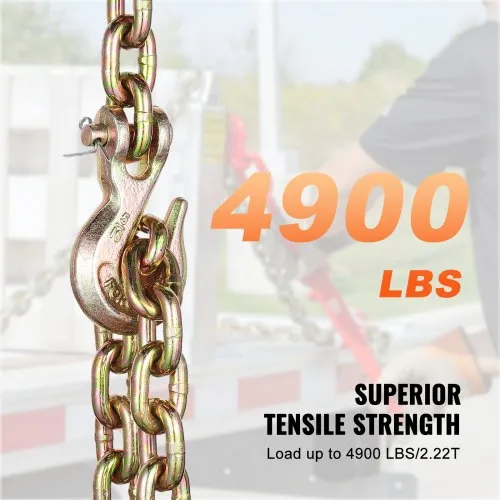
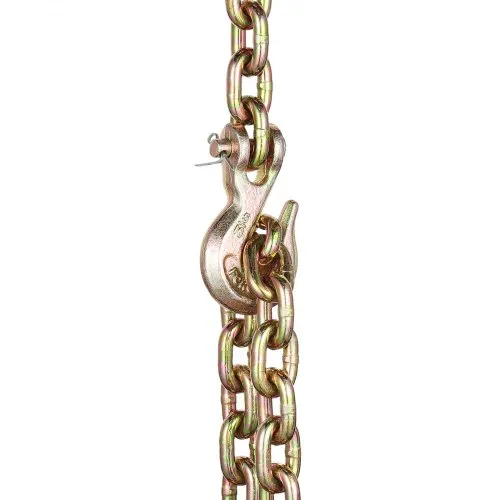
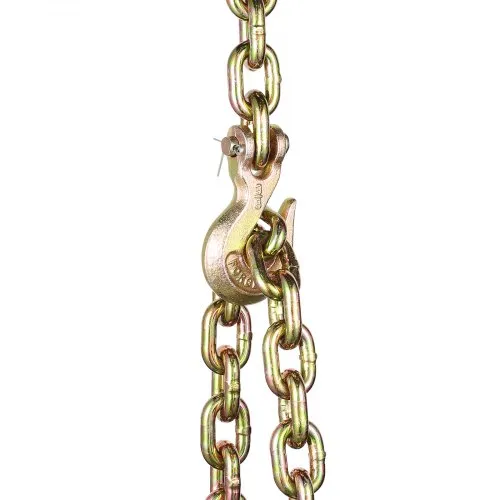
Clevis grab hooks are among the most popular hook types for towing and recovery chains. Hook style directly affects how quickly and safely you can attach a chain. You can lower the effective working length by hooking into any link along the chain instead of requiring a precise pre-cut length since a clevis grab hook holds the chain link itself rather than the end of the chain.
To provide a safe, low-profile connection point that won't move or loosen under the vibration of highway driving, trailer & truck tie down chains often use a slightly different hook arrangement. Although they often provide less solid retention than a grab hook, slip hooks offer a smooth surface that slides freely down a chain, which some operators prefer for easy release under load.
Match the hook type to your main use case. For example, grab hooks often work better for recovery and towing tasks because of their length flexibility. Still, cargo securement may require a hook style rated specifically for tie-down applications. Since a weak hook might become the limiting element in an otherwise robust chain assembly, it is equally vital to check the working load limit of the hook itself rather than merely the chain.
Certification and Material Standards Worth Checking
Certification is more than just a nice-to-have for transportation, hauling, and commercial towing. If a load shifts or comes loose during transit, using an uncertified chain for commercial transportation may result in fines or liability issues. DOT certified transport chains meet specific federal criteria for securing cargo on public roads.
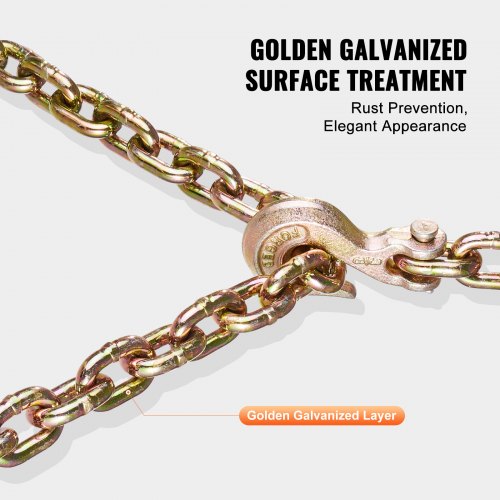
Long-term durability and safety margin are also impacted by material quality. Compared with uncoated carbon steel equivalents, galvanized manganese steel binder chains resist mechanical wear and rust from exposure to the elements or road salt because they combine a corrosion-resistant zinc coating with a manganese steel alloy known for high tensile strength.
Another certification-adjacent area is heavy duty logging chains, which are designed to endure the abrasion, impact, and frequent heavy loading typical of construction and forestry operations. Although not all towing chains require this degree of durability, examining a chain's rating and certification, rather than relying solely on grade, provides a more comprehensive picture of whether it is appropriate for heavy personal, commercial, or industrial use.
Why Choose VEVOR Tow Chains?
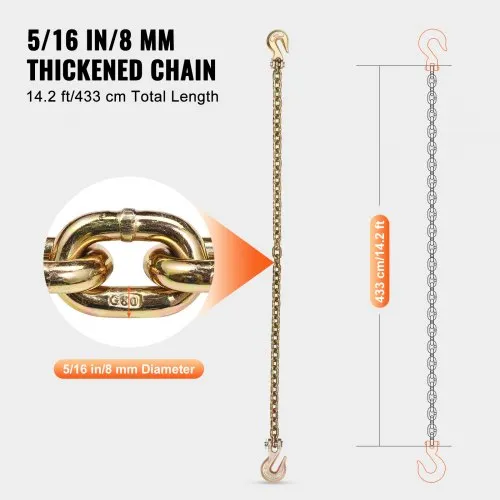
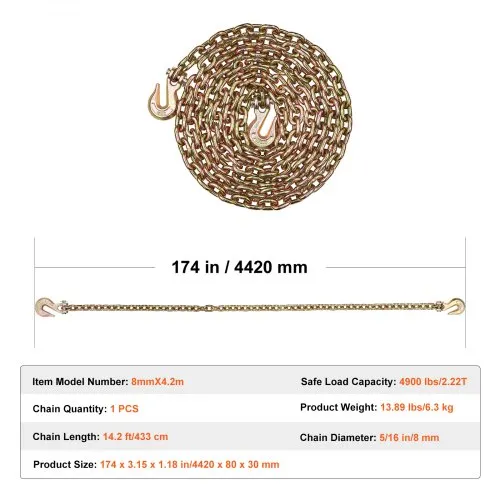
From a little 5/16 inch x 14.2 ft tow chain set to more robust 3/8-inch configurations, VEVOR's tow chains meet every grade, diameter, and length combination that severe towing and recovery work demands. Compared with boutique rigging companies, each chain is reasonably priced without sacrificing Grade 80 strength or hook quality. You can get commercial-grade durability at a reasonable cost with DOT-certified options and galvanized construction. Choose the tow chain that best suits your vehicle, load, and needs by browsing the full lineup now.
FAQs
What grade chain do I need for towing a vehicle?
Grade 80, which offers a good strength-to-weight ratio, is typically recommended for towing and recovery. The sudden loads involved in vehicle towing are too much for lower classes, such as Grade 30 or Grade 43.
Should I choose 3/8-inch or 5/16-inch chain?
While 5/16-inch chain is lighter and easier to handle for towing cars and small trailers, 3/8-inch chain offers a higher working load limit for bigger vehicles and equipment.
Are these chains legal for commercial cargo transport?
Federal requirements for commercial cargo security on public roads are only met by chains that bear the DOT certification label. Before using any chain for regulated commercial hauling or transportation, make sure it is certified.
What's the difference between a grab hook and a slip hook?
A grab hook lets you quickly change the effective length by grasping any link in the chain. A grab hook typically holds more firmly than a slip hook, which glides freely and releases rapidly under strain.
How long should my tow chain be?
A 14- to 20-foot chain is ideal for most daily towing since it provides sufficient space for safe following. Chains less than ten feet are better suited for tight cargo securement or close-coupled towing.