Serving Carts





Results for Serving Carts
A serving cart is a wheeled, multi-shelf trolley used to carry food, drinks and tableware from one place to another and to keep them within reach once they arrive. Its stacked shelves act as a portable work surface, so one person can move a full load in a single trip instead of carrying items by hand. Raised edges or rails help keep plates, glasses and bottles in place while the cart rolls, and swivel casters let it turn in tight spaces. When parked, the cart works as a temporary side table or station, then rolls away for storage when service ends.
VEVOR's serving carts span compact and full-length formats, from a 20.08 in three-tier cart to a 39.37 in glass-shelf model, with two or three tiers rated up to 44 lbs per shelf. Bar carts pair those tiers with a wine rack and stemware holder, in gold metal with glass or wood shelves or a black industrial frame with rustic boards. Flat-deck utility service carts trade bottle storage for higher load ratings, kitchen island carts add a work top and enclosed storage, and stainless steel carts and utility tables give food service a surface that wipes clean. Typical uses are home bars, dinner parties, coffee stations, hotel lounges, cafes and catering events.
Five things decide what you need:
- Load: total your heaviest regular service and pick a per-shelf rating with room to spare.
- Footprint: measure where the cart will park and your narrowest doorway before comparing length and depth.
- Shelf surface: glass looks refined, wood feels warm, and steel or stainless steel handles spills and heavy use.
- Built-in storage: choose a wine rack and stemware holder for drinks, or open flat decks for platters and supplies.
- Wheels: look for locking casters, and match soft or hard wheels to your floor type.
See the full bar furniture collection for stools, tables and wine storage that pair with your cart, or browse kitchen and dining room furniture for more rolling storage and prep pieces.
Serving Cart Types at a Glance
Use this overview to match the cart style to how you serve before comparing individual models.
| Cart Type | Shelf Layout | Built-in Storage | Mobility Setup | Trade-offs |
|---|---|---|---|---|
| Bar cart | 2 or 3 tiers with guard rails | Wine rack and hanging stemware holder | 4 swivel casters, 2 locking | Keeps drinks organized; racks take space from flat serving area |
| Tea trolley | Usually 2 tiers, often a removable top tray | Flat trays with low rims | Push handle with smaller wheels | Elegant for light service; lower capacity and few storage extras |
| Utility service cart | 2 or 3 wide flat decks with raised lips | Open decks, some with hooks or side holders | Push handle, larger casters, 2 with brakes | Most flat space and load; plain look suits kitchens and back of house |
| Kitchen island cart | Work top above shelves, drawers or a cabinet | Enclosed cabinet, drawers, spice or towel racks | Swivel casters | Doubles as prep space; heavier and slower to move between rooms |
| Stainless steel work cart | Single work top plus undershelf | Open undershelf, adjustable height on some | 4 wheels on rolling models | Hygienic and easy to sanitize; industrial look for living rooms |
VEVOR Serving Carts on Wheels for Home, Bar, and Hospitality Use
Are you looking for a dependable serving cart that keeps food, beverages, and necessities accessible and organized? VEVOR serving carts on wheels provide the mobility and storage capacity you require, whether you are setting up a hotel lounge, running a busy cafe, or throwing a dinner party. Choose the ideal cart to fit your workload, style, and available space.
Size & Weight Capacity, Finding the Right Serving Cart for Your Needs
One of the most crucial choices when purchasing serving carts is selecting the appropriate size and weight capacity. The dimensions and load-bearing specifications of your cart will directly affect how well it performs in everyday use, whether you are managing a busy restaurant floor or furnishing a small home bar.
Compact Serving Carts for Small Spaces and Light Loads
Work requires a high load capacity, and not every area requires a large cart. Not every work requires a huge load capacity, and not every area requires a large cart. For small home bars, studio kitchens, apartments, and intimate dining arrangements with constrained floor space, compact serving carts are perfect. When not in use, VEVOR's smaller serving cart on wheels is easy to tuck next to a sofa, bar counter, or kitchen island, as they are typically 23–28 inches long and 15–18 inches wide.
The weight capacity of these carts is typically 55-88 pounds (25-40 kg) per shelf, more than enough to transport glasses, bottles, snacks, and tableware. Anyone can easily move them through tight corners and small hallways thanks to their lightweight frame, which often weighs less than 15 pounds.
A small server cart can function as a mobile drink station, snack trolley, or dessert display for informal house entertainers without taking up too much space. The movable base lets you relocate service wherever guests are, and the compact footprint makes setup and storage simple. A small serving cart with wheels is the ideal choice if convenience and space efficiency are more important to you than raw hauling capacity.
Mid-Size Serving Carts for Everyday Home and Office Use
For most buyers, mid-size serving carts are ideal since they are both big enough to handle substantial loads and compact enough to easily maneuver through hallways and entrances. With a standard length of 30 to 36 inches and a capacity of 88 to 132 pounds (40 to 60 kg) per shelf, VEVOR's mid-range models are incredibly adaptable for home, office, and light commercial settings. A mid-sized serving cart with wheels can serve as a mobile coffee station, a rolling kitchen island, or a party beverage cart in a residential setting.
They are ideal for use as supply carts, AV equipment trolleys, or catering assistance at events and meetings. On one level, beverages are on another, and napkins and utensils are on a third in a two- or three-shelf arrangement. The robust crossbar frame and reinforced shelf edges of VEVOR's mid-size models keep the cart stable even when it is nearly full. When rolling across uneven surfaces or hardwood floors, where wobble could be disastrous for a tray of glasses, this stability is especially important. The mid-size category offers the best balance of capacity, portability, and cost if you are purchasing a serving cart for frequent, varied use throughout various rooms or work zones.
Strong Serving Carts for Commercial and High-Volume Settings
A strong serving cart is essential for busy bar settings, restaurant kitchens, hotel banquet rooms, and catering companies. Commercial-grade serving carts on wheels from VEVOR are designed to withstand prolonged, heavy use without experiencing structural fatigue. These models usually have weight limits of 132–220 lbs (60–100 kg) per shelf and a total load capacity of at least 400 lbs across all shelves. The broader decks of VEVOR's heavy-duty serving carts, which are typically 36 to 48 inches long, provide service personnel the space they need to move several dishes, pitchers, bottles, and equipment in a single trip.
Standard components that keep the cart secure and stable under heavy loads include reinforced welds, stronger gauge steel frames, and industrial-grade locking casters. These carts also speed up service cycles and lessen employee fatigue in commercial settings. A well-specced cart enables one team member to manage the entire load in a single, seamless trip, eliminating the need for three separate excursions from the kitchen to the dining floor. Investing in a properly rated heavy-duty serving cart pays off immediately for any organization where customer satisfaction and revenue are directly affected by service speed, efficiency, and equipment reliability.
How to Match Cart Size and Capacity to Your Specific Use Case
Before buying a serving cart, make sure you understand your real use case. This will save you money and frustration. The number of products you plan to carry on each trip, the cart's travel distance, and the type of surface it will most frequently roll on are important factors to consider. Mentally stack your heaviest customary service, such as a large ice bucket, six wine glasses, a cheese board, and a bottle collection, to determine a realistic load for home use. Then, match that estimated weight to the cart's per-shelf rating, adding a 20% safety margin. To account for unforeseen overloading during rush service, always choose a cart rated for at least 25–30% more than your maximum anticipated load when using it for commercial purposes.
The size should also account for entryway clearance. In the United States, interior doorways are typically 32 to 36 inches wide. A 28-inch-wide cart will fit through easily, while a 34-inch-wide cart needs to be maneuvered carefully. Every serving cart product page on VEVOR provides explicit dimensions, making it easy to measure before purchase. One of the most frequent reasons for returns for both server and beverage carts can be eliminated by taking five minutes to cross-reference cart dimensions with your narrowest entry point.
Material & Mobility Features in VEVOR Serving Carts
How long a service cart lasts and how enjoyable it is to use daily depend on the materials used in its construction and the quality of its mobility components. VEVOR's serving carts are made from a variety of materials suitable for various settings and aesthetic tastes and are designed with both durability and easy handling in mind.
Steel, Stainless Steel, and Wood: Choosing the Right Material
Carbon steel with powder coating, stainless steel, and wood-and-metal hybrid designs are the three main material categories for VEVOR serving carts, each suited to different settings and user preferences. Carbon-steel carts with powder coating offer superior structural rigidity at a lower cost. These carts are suitable for indoor use in homes and offices due to the coating's resistance to moisture and minor scratches. They come in silver, white, and black finishes that complement most interior design styles.
A powder-coated steel server cart is a wonderful place to start for customers who value affordability and neat appearance. For food service settings where corrosion resistance and hygiene are essential, stainless steel serving carts are the preferred option. The surface resists rust even in high-humidity kitchen environments, is easy to clean after spills, and maintains its polished appearance for years of regular use. Restaurant kitchens, hotel buffets, and catering businesses frequently use VEVOR's stainless models. Wood-and-metal hybrid carts, which combine a wooden shelf surface with a metal frame, add warmth and aesthetic appeal to home entertainment areas. These styles work well in dining rooms, living rooms, and home bars where the cart serves as a decorative accent. They work well in dry indoor environments; they are not appropriate for moist industrial kitchens.
Serving Cart Shelf Surfaces: Care and Daily Handling
Shelf surfaces wear differently in daily use, so check how each one handles spills, cleaning and knocks before you buy.
| Shelf Surface | Spill Tolerance | Cleaning Method | Knock and Scratch Risk | What to Watch For |
|---|---|---|---|---|
| Tempered glass | Total; liquids wipe off without soaking in | Glass cleaner and a lint-free cloth | Resists scratches; edges can chip if struck | Fingerprints and water rings show; use coasters for a clean look |
| Engineered wood (PB or MDF board) | Good on the laminate face, weak at bare edges | Damp cloth, then dry straight away | Surface scuffs; corners can dent | Standing water at seams can swell the board, wipe spills fast |
| Powder-coated steel | Good while the coating is intact | Mild soap and water | Coating can chip under heavy knocks | Touch up chips early so rust does not start |
| Stainless steel | Excellent; non-porous and rust resistant | Soapy water or a food-safe sanitizer | Shows fine scratches; very hard to dent | Wipe with the grain to keep the finish even |
Wheels, Casters, and Locking Mechanisms for Smooth Mobility
A serving cart on wheels' mobility system is equally as crucial as its frame. VEVOR outfits its carts with carefully selected caster wheels appropriate for the intended use area. The majority of VEVOR serving carts feature caster wheels measuring 3 to 4 inches in diameter, mounted on swivel bases, enabling 360-degree rotation for easy direction changes in confined spaces. Rubber-coated wheels are the best option for durable flooring surfaces like tile, hardwood, and laminate since they roll silently, do not slide, and do not leave scuff marks on high-end floor finishes. Larger-diameter wheels with more aggressive tread provide greater rolling resistance and stability for outdoor patios or rougher surfaces.
When the cart is placed on a moderate incline or in industrial situations, locking casters are an essential safety element. VEVOR's wheeled serving carts typically have at least two locking casters that engage with a simple downward press of the foot. These casters are often located at the front. This stops the trolley from unexpectedly rolling away while loading, unloading, or plating food. When assessing mobility, consider the casters' swivel radius and whether the wheels have sealed bearings. In situations where food particles or moisture can contaminate the rolling mechanism, sealed bearings greatly increase wheel life. This small detail has a big impact on how long commercial serving carts last.
Serving Cart Best-Seller Comparison
These five carts lead the category page, so compare their size, build and weight to find the one that fits your space.
| Product | Tiers | Shelf Material | Frame Finish | Length x Depth x Height | Cart Weight | Best For |
|---|---|---|---|---|---|---|
| Tempered Glass Bar Cart, 3 Tier, Gold | 3 | 4 mm tempered glass | Gold | 39.37 x 13.79 x 37.0 in | 36.9 lbs | Longest and only glass-shelf cart here; a showpiece living room bar |
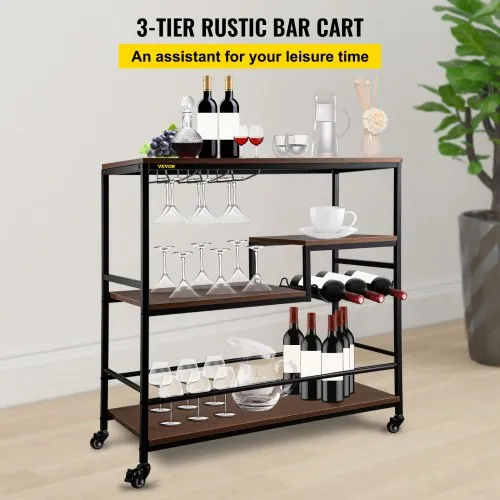
| Rustic Serving Cart, 3 Tier, 26.77 in | 3 | Engineered wood (PB board) | Black frame, rustic brown shelves | 26.77 x 14.17 x 32.68 in | 22.7 lbs | Shortest of the 14 in deep carts; fits beside a sofa or island |
| Industrial Utility Station, 3 Tier, 20.08 in | 3 | Engineered wood (PB board) | Black frame, rustic brown shelves | 20.08 x 11.02 x 33.07 in | 11.2 lbs | Smallest and lightest cart here; studio kitchens and tight corners |
| Rustic Bar Cart, 3 Tier, 34.64 in | 3 | Engineered wood (PB board) | Black frame, rustic brown shelves | 34.64 x 14.17 x 32.68 in | 27.3 lbs | Longest 3-tier wood cart here; buffet spreads for larger gatherings |
| Gold Beverage Trolley, 2 Tier, Wood and Mesh | 2 | Engineered wood and mesh | Gold | 33.86 x 11.81 x 32.68 in | 13.2 lbs | Only 2-tier cart here; long, light frame for display along a wall |
Why Choose VEVOR Serving Carts?
Smart design, long-lasting materials, and seamless mobility are all combined in VEVOR serving carts at affordable costs for both home and business customers. Our whole collection meets every demand, from heavy-duty server carts for commercial kitchens to small beverage carts for entertaining. There is nowhere better to locate your perfect serving cart, thanks to a reasonable price and dependable after-sales assistance. Choose VEVOR now to add convenience to every space.
FAQs
What weight capacity should I look for in a serving cart?
A per-shelf capacity of 55–88 lbs is usually adequate for domestic use. Select carts rated at 132 lbs or more per shelf for heavy-duty or commercial use. Always account for a safety buffer of 20–25% above your maximum anticipated load.
Are VEVOR serving carts suitable for outdoor use?
Certain VEVOR serving carts, especially the stainless steel models, can be used outside on decks and patios. Rust-resistant materials and wider caster wheels—which are more stable on uneven ground than regular indoor wheels—should be a top priority for outdoor use.
What is the difference between a serving cart and a beverage cart?
Bottle holders, glass racks, and smaller shelves that are best suited for serving drinks are common features of beverage carts. Although many VEVOR models efficiently fulfill both functions, serving carts provide wider, flatter shelves for general food and item movement.
Can serving carts on wheels be used in commercial kitchens?
Indeed. The sanitary surfaces, high load ratings, and locking casters of VEVOR's stainless steel serving carts make them ideal for commercial kitchens. Before making a purchase for professional food service, always confirm the weight capacity and material rating of the particular model.
How do I maintain the wheels on my serving cart?
Check that the locking mechanisms are firmly engaged, and clean the caster wheels regularly to remove debris. Rinse wheel housings on carts used in food service situations regularly to prevent grease buildup. To stop corrosion, keep non-stainless parts out of the water.
Where can I buy durable and affordable hospitality carts?
VEVOR sells hospitality carts directly online, from home bar carts to heavy-duty utility models built for restaurants and hotels. For commercial use, look for steel frames, locking casters and per-shelf ratings that exceed your heaviest load. Browse VEVOR's carts on wheels range to compare sizes and capacities.
What are the advantages of using a mobile serving cart for events?
A mobile serving cart cuts trips between the kitchen and guests, since one person can move drinks, dishes and utensils in a single run. It also creates a station that follows the crowd, then rolls away when the event ends. Lock the casters before guests start serving themselves.
Are there different types of hospitality carts for various settings?
Yes. Bar carts with wine racks suit lounges and home bars, while flat-deck utility carts handle catering and back-of-house work. Kitchen island carts add prep space, and stainless steel rolling work tables suit commercial kitchens where hygiene matters. Match the cart to your floor type, load and cleaning routine.
What is the difference between a serving cart, a tea trolley, and a bar cart?
A serving cart is the broad category: a wheeled, multi-shelf trolley for moving food and items. A tea trolley is a lighter, usually two-tier version for tea or dessert service. A bar cart adds a wine rack and stemware holder, as VEVOR's bar cart collection shows.
Are serving carts useful for small homes and apartments?
Yes. A compact cart adds shelf space without permanent furniture, then rolls into a corner when not in use. Slim three-tier designs such as this 20.08 in industrial cart fit beside a sofa or fridge. Measure doorways and the parking spot before buying.