Lifting Equipment















Results for Lifting Equipment
Lifting equipment covers the machines that raise, lower, or reposition heavy loads so workers don't have to do it by hand: hydraulic lift tables that adjust a platform's height, pallet stackers and jacks that move palletized goods, and specialized hoists and magnets for niche handling tasks. Each type solves a different part of the material-handling chain, from positioning a load at a comfortable working height to transporting it across a warehouse floor or lifting it onto a storage rack. VEVOR's range covers light-duty workshop tasks through heavy industrial warehousing, with capacities and features suited to each.
The range breaks down into three core groups. Lift tables use hydraulic or electric actuation to raise a platform for ergonomic positioning, with capacities from around 330 lbs on compact carts up to 1,760 lbs or more on heavy-duty models. Pallet handling equipment includes stackers, semi-electric stackers, material lift winch stackers, and pallet jack trucks, with capacities ranging from roughly 330 lbs on winch stackers up to 6,600 lbs on manual pallet jacks. Specialized lifting and hoisting systems cover lifting magnets rated up to 3,300 lbs of pulling capacity, manual trolleys for beam-mounted transport, and niche hoists like deer hoists and forklift jib crane attachments.
These machines serve warehouses stacking palletized goods to rack height, workshops positioning materials at a comfortable working height throughout a shift, and facilities handling ferrous materials or beam-mounted loads. When choosing equipment, size capacity to your heaviest realistic load rather than an average one, match actuation (manual, semi-electric, or full electric) to how often the equipment will be used, and confirm the equipment's lift height or reach covers your actual application. Browse the full VEVOR lifting equipment lineup to compare current models side by side.
Lifting Equipment Types at a Glance
| Type | Working Principle | Best Uses | Suitable Environment |
|---|---|---|---|
| Lift Tables | Hydraulic or electric actuation raises/lowers a platform | Ergonomic positioning of materials at working height | Workbenches, assembly stations, workshops |
| Pallet Handling Equipment | Hydraulic lift combined with wheeled or forked transport | Moving and stacking palletized goods | Warehouses, distribution centers, stockrooms |
| Specialized Lifting & Hoisting | Magnetic hold, winch-and-cable, or beam-mounted trolley systems | Handling ferrous materials, beam-mounted transport, niche hoisting | Factories, machine shops, hunting camps |
VEVOR Lifting Equipment for Material Handling, Ergonomic Positioning, and Warehouse Efficiency
Are you looking for solutions that keep workers safe while boosting productivity during long, hard shifts? Lifting things by hand can hurt people at work and slow down operations when there are a lot of them. VEVOR makes lifting equipment that is carefully designed to hold loads while putting less strain on workers. Our range can handle a wide range of needs, from light-duty workshop tasks to heavy industrial material handling that needs the most capacity and durability.
Equipment Type, Application Categories, and Handling Options
Knowing the different types of equipment that are available helps buyers choose the right solutions for their specific handling needs and operational setups. VEVOR groups lifting equipment into useful categories that meet different needs, such as stationary positioning systems and mobile material transport solutions that work with a variety of facility layouts.
Lift Tables for Ergonomic Positioning
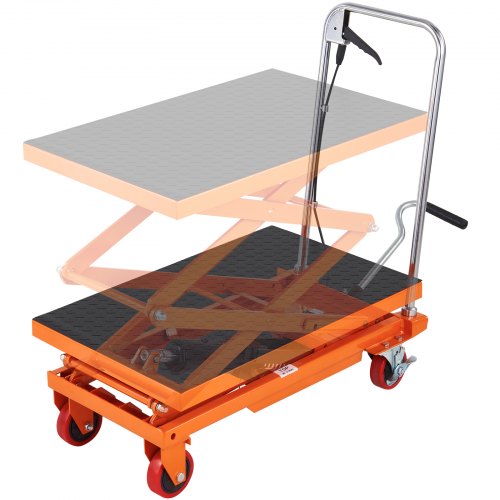
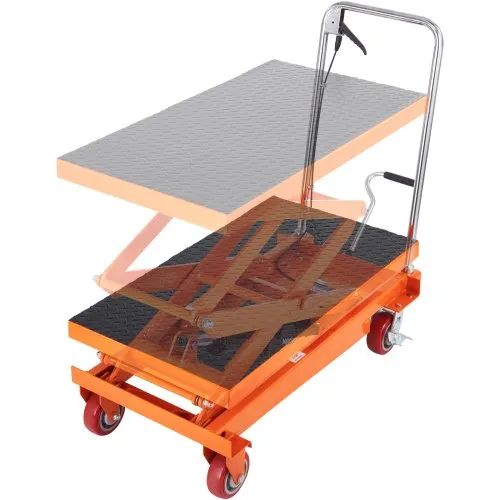
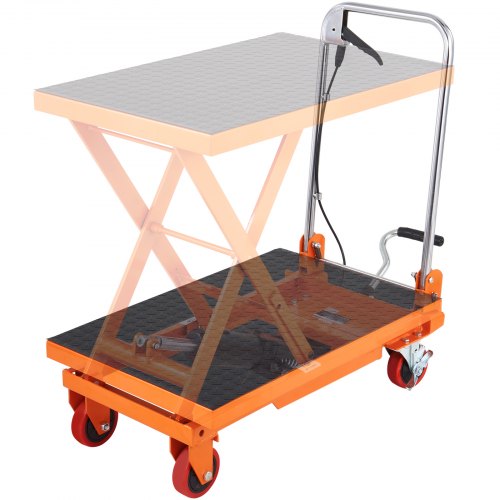
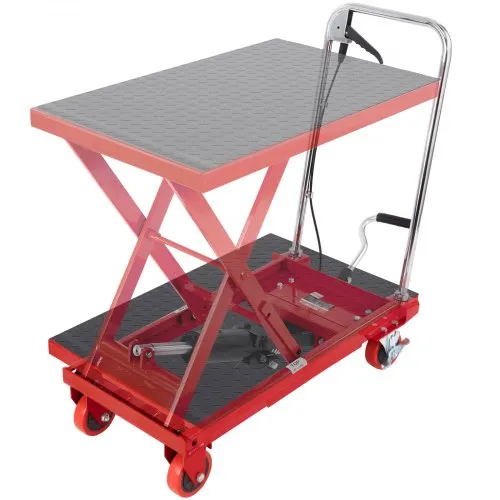
In industrial settings, lifting workbenches let you adjust the table height so you don't have to bend or reach awkwardly when moving materials. Hydraulic systems lift heavy loads to comfortable working heights, reducing the risk of injuries that can harm workers' health and productivity. VEVOR lift tables are made of heavy-duty materials that can support heavy loads and allow smooth, precise height adjustment.
Different types of lifting workbenches feature platform configurations that work well for different load types and positioning needs. Standard rectangular platforms can hold palletized goods, while custom designs can hold machinery, drums, and other loads that aren't shaped like pallets. Lifting equipment with flexible platform options can meet a variety of operational needs without needing multiple specialized units.
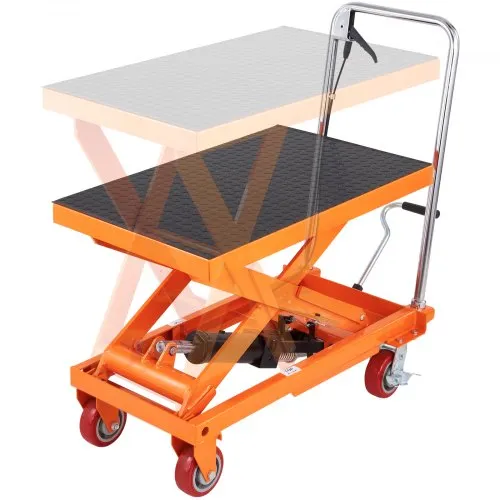
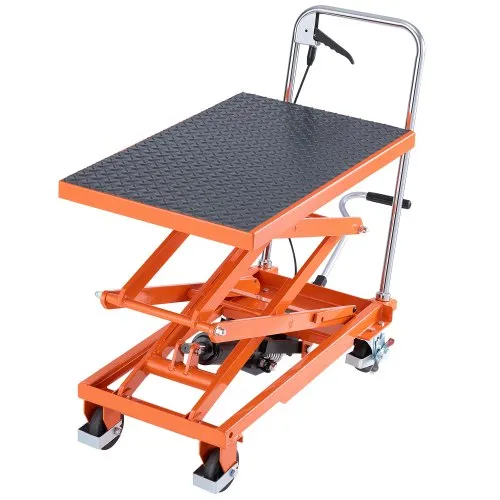
A hydraulic lift table cart can raise and lower loads and move them around the facility easily. Wheeled bases move loads between workstations, and hydraulic systems lift materials to the right heights. VEVOR's hydraulic lift table options combine positioning and transportation functions into a single, versatile unit that works well.
There are many ways to actuate, from manual foot pumps to powered hydraulic systems, each suited to the level of work to be done. A hydraulic lift table with electric actuation is good for high-cycle jobs where hand pumping tires the operator. When choosing lifting equipment, you need to find a balance between ease of use and the amount of work it can do, while staying within your budget.
Pallet Handling Equipment for Warehouse Operations
Pallet stackers lift loaded pallets to the height of storage racks, so smaller facilities don't need forklifts to do the job. Straddle designs work with standard pallets, while counterbalanced designs work well with closed-bottom containers. VEVOR's pallet lifters use quality hydraulics that lift smoothly and reliably through their specified height range.
Power assistance in pallet lifters makes it much easier for workers to do their jobs in a busy warehouse. A semi-electric pallet stacker combines powered lifting with manual transport, making it easy to use without the hassle of a full electric forklift. Semi electric pallet stackers are much more productive than fully manual ones.
Material lift winch stacker setups are made for high storage needs that need precise load placement at height. Winch mechanisms let you lift loads in a controlled manner, and mast systems ensure loads move along vertical paths accurately. VEVOR's material lift winch stacker can handle loads that are too heavy or awkward for some fork-based equipment.
Pallet jack trucks can move loads quickly and efficiently across a facility's floors thanks to their load-transport capabilities. Hydraulic lift mechanisms raise pallet heights, and ergonomic handles make steering easy. VEVOR's pallet truck options feature quality wheels and bearings that help make pushing heavy loads easier.
The table below lines up the four pallet handling types described above.
Pallet Handling Types Compared
| Type | Actuation | Typical Capacity | Best For |
|---|---|---|---|
| Pallet Stacker (Full Electric) | Powered lift, powered drive | 3,300 lbs | Warehouses replacing a forklift for rack-height stacking |
| Semi-Electric Pallet Stacker | Powered lift, manual push transport | 3,300 lbs | Powered lifting without full electric forklift cost |
| Material Lift Winch Stacker | Manual winch and mast | 330-551 lbs | Precise load placement at height for lighter, awkward loads |
| Pallet Jack Truck | Manual or electric | 3,300-6,600 lbs | Fast floor-level pallet transport across a facility |
Specialized Lifting and Hoisting Systems
Lifting magnets make it easier to move ferrous materials without the need for straps, chains, or mechanical clamps. Powerful permanent or electromagnetic systems hold steel plates, beams, and other materials securely while they are being positioned. VEVOR's lifting magnets use high-quality magnetic materials that provide a strong holding force in demanding industrial settings.
Crane attachments make lifting equipment more versatile by enabling it to handle a wider range of loads. A forklift jib attachment turns regular forklifts into mobile crane systems that can reach beyond the limits of forks. VEVOR's forklift truck attachments let you lift things in places where regular overhead crane systems can't reach.
Specialized hoisting is used for tasks beyond the usual material-handling needs in an industrial setting. A deer hoist helps hunters process their game quickly and easily by using overhead suspension systems. VEVOR's deer hoists come with the right capacity ratings and mounting options for use in hunting camps.
Manual trolleys are a cheap way to move heavy loads around facilities, using tracks mounted on beams. Mounting on an I-beam lets you move materials around without taking up floor space that would affect work areas. When you put together manual trolleys and chain hoists, you get flexible lifting equipment systems that can handle a wide range of positioning needs.
Lifting Capacity and Performance Features for Lifting Equipment
In addition to choosing the right type of equipment, knowing the capacity ratings and operational features ensures that purchases are exactly what is needed for handling. VEVOR lifting equipment offers a range of capacities and performance options to address diverse material-handling challenges.
Weight Capacity Specifications
Capacity ratings indicate the maximum loads that lifting equipment can safely handle when used normally. Going over the rated capacities can cause equipment to break, loads to be damaged, and workers to get badly hurt, so you must follow the rules. VEVOR's lifting workbenches, pallet lifters, and hoists all have clear capacity specifications that help you choose the right one for your needs.
Safety factors in capacity ratings give you room to move when the load or operation changes. Design safety factors are built into quality lifting equipment to ensure it performs well even when close to its rated limits. The forklift should be able to handle loads beyond the expected maximum so that it can be used with confidence in all operational situations.
When concentrated weights are very different from evenly distributed loads, load distribution affects the practical capacity available. It is very important for lifting magnets and forklift attachments to list both total capacity and center-of-gravity limits. When using a semi-electric pallet stacker, ensure the load is in the correct position according to the equipment's design.
Wear and tear can reduce capacity, so regular inspections are needed to ensure safe operation at rated loads. To keep hydraulic lift table systems working at their original capacity, they need regular maintenance. Lifting equipment inspection programs identify problems before they worsen and compromise safety.
Lift Height and Stroke Specifications
The elevation range helps you determine how to position and stack lifting equipment effectively. Lifting workbenches display the height of the lowered and raised platforms, indicating the total stroke. In warehouse settings, pallet lifters display the maximum fork height, which helps determine the maximum rack height.
Minimum height requirements affect how loads enter and exit a system and how they interact with other material handling systems. Lifting workbenches can take loads from conveyors on the floor or low docks because they have lower collapsed heights. When choosing a material lift winch stacker, ensure the lowered heights are suitable for the load transfer operations you plan to perform.
Stroke speed affects how productive operations are when they repeatedly need to make quick elevation changes. During heavy use, powered lifting equipment usually works faster than manual lifting equipment. Powered drives are built into electric stair-climbing dolly systems, letting you move loads between levels without carrying them yourself.
Multi-stage lifting mechanisms can lift items higher while occupying less space when not in use. Lifting workbenches have scissor mechanisms that give them a lot of stroke and fold up small when they are lowered. Deer hoist systems that use mechanical advantage make it possible to lift heavy game by hand.
Mobility and Special Features
Different wheel configurations can make it harder or easier for lifting equipment to move across various floor types and work environments. Larger wheels can handle rough surfaces, while polyurethane materials prevent scratches on finished floors. To safely operate on tracks, manual trolleys need beam profiles that work with them.
An electric stair-climbing dolly helps solve problems with moving loads between floors where standard wheeled equipment can't be used. Powered track systems can safely climb stairs while carrying heavy loads. VEVOR's electric stair-climbing dolly options make it easy to move items up and down stairs without using an elevator or risking carrying them by hand.
Brake systems keep the lifting equipment from moving while loading and positioning it safely. Floor locks on lifting workbenches stop them from rolling, and wheel brakes on pallet lifters keep them in place. When choosing a hydraulic lift table, make sure it has the right brakes for the job you need it to do.
Control systems in powered lifting equipment have a big impact on how easy it is to use and how accurately it can be positioned. Proportional controls let you change the speed of the operation, while simple switches let you raise and lower the object. Forklift jib crane attachments may have controls for rotation and extension, allowing you to position them in more ways.
See how VEVOR's current top lifting equipment listings compare at a glance (selected in on-page order):
Best-Seller Comparison
| Product | Lifting Height | Capacity | Price |
|---|---|---|---|
| VEVOR Hydraulic Lift Table Cart, 330 lbs Capacity, 50 in Lifting Height | 50 in | 330 lbs | $289.90 |
| VEVOR Full Electric Pallet Stacker, 3300 lbs Capacity, 127.6 in Lift | 127.6 in | 3,300 lbs | $3,999.90 |
| VEVOR Full Electric Pallet Stacker, 3300 lbs Capacity, 96.06 in Lift | 96.06 in | 3,300 lbs | $3,941.58 |
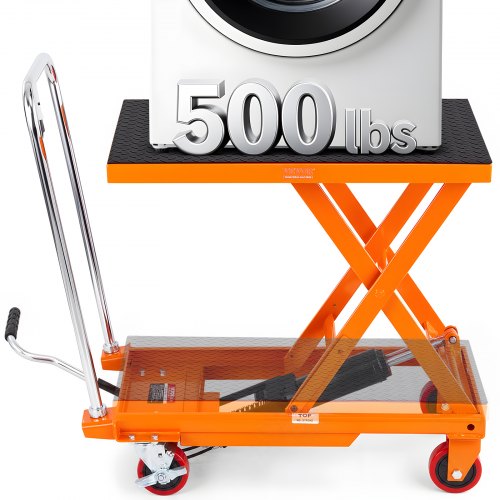
| VEVOR Hydraulic Lift Table, 500 lbs Capacity, 47.2 in Lifting Height | 47.2 in | 500 lbs | $359.90 |
| VEVOR Electric Pallet Jack, 4400 lbs Load Capacity | N/A (floor-level transport) | 4,400 lbs | $2,199.90 |
Why Choose VEVOR Lifting Equipment?
VEVOR offers a full range of lifting equipment that can handle any material-handling need, from light workshop positioning to heavy industrial warehousing operations that require the most capacity and durability. Our collection strikes a balance between high-quality engineering and low prices, which is what you need for cost-effective investments in facility equipment. Competitive pricing helps ensure that operations that care about safety can still use the equipment without compromising load capacity or operational reliability standards. Lifting tools from VEVOR work great in factories, distribution centers, auto shops, and businesses. Check out our selection today and find lifting equipment that keeps workers safe while making handling much more efficient.
Frequently Asked Questions
How do I select the appropriate lifting capacity?
Figure out the highest expected loads, including containers and handling equipment. Choose lifting equipment that can handle loads 20-25% above the maximum to ensure it works safely in tough conditions.
Do lifting workbenches require professional installation?
Most lifting workbenches are ready to use as soon as they are taken out of the box and set up. Depending on the specific setup, you may need help from a professional to make permanent connections or mount things.
How often should lifting equipment be inspected?
Daily visual checks identify obvious problems, and monthly detailed checks ensure that hydraulic systems and structures remain strong. Annual professional inspections help ensure compliance with applicable regulations.
Can pallet stackers replace forklifts entirely?
Pallet stackers are suitable for smaller businesses that don't need to move large volumes of goods. Forklifts that can do more than stackers are better for businesses that move a lot of goods.
What maintenance do hydraulic systems require?
Once a month, check the fluid levels and look for leaks. To keep lifting equipment working well, change the hydraulic fluid once a year and fix any worn seals right away.
Q: Where can I buy reliable lifting equipment online?
A: VEVOR.com carries the full range, from hydraulic lift tables and pallet stackers to lifting magnets, manual trolleys, and specialized hoists, all backed by clear capacity specifications and dependable after-sales support. Browse by equipment type to find the model that matches your material-handling needs.
Q: What are the different types of portable lifting devices available?
A: VEVOR's lineup spans hydraulic lift tables and carts for positioning, pallet stackers and pallet jack trucks for warehouse transport, lifting magnets for handling ferrous materials without straps or chains, manual trolleys for beam-mounted movement, and specialized hoists like deer hoists and forklift jib crane attachments.
Q: How do ergonomic lifting devices improve safety and efficiency?
A: Ergonomic lift tables raise loads to a comfortable working height so workers don't have to bend or reach awkwardly, which cuts the strain-related injuries that slow down operations. Hydraulic systems handle the heavy lifting, letting staff focus on precise positioning rather than manual effort.
Q: How do I protect lifting equipment during storage?
A: Keep equipment in a dry, covered area to prevent rust on hydraulic components and exposed metal parts, and relieve hydraulic pressure before long-term storage rather than leaving a lift table or stacker under load. Check for corrosion and top off hydraulic fluid before bringing equipment back into service.
Q: Does lifting equipment need to be certified?
A: Certification requirements depend on your equipment type, application, and local regulations, so check the specific product listing and your workplace safety rules before relying on a rated capacity for critical lifts. Reputable lifting equipment states its rated capacity and safety factor clearly so you can verify compliance.