Grease Pump


Results for Grease Pump
A grease pump is a lubrication unit that moves grease from a bulk container to the fittings on machines and vehicles. It draws grease from a bucket, pail, or drum and pushes it under high pressure through a hose to a grease gun, which locks onto each fitting and forces fresh lubricant into the bearing or joint. Because the reservoir holds far more than a hand-held cartridge, one fill can service many fittings in a row, keeping pressure steady from the first point to the last and cutting down on refills between jobs.
This range is built around air-operated pumps with a 50:1 pressure ratio and a 13 ft high-pressure hose, from the compact 3 gallon 12L grease pump and the 5 gallon 20L bucket grease pump to the 10.5 gallon 40L grease pump on wheels. For grease bought in bulk, a barrel-cap grease pump mounts straight onto your drum, all within the wider lubrication tools line. Typical uses are fleet service bays, farm and construction equipment, factory maintenance, and heavy truck chassis work.
Five things decide what you need:
- Daily volume: match a 12 L pump to light use, 20 L to busy shops, and 40 L to fleets.
- Grease supply: pick a barrel-mount pump if you buy grease in drums rather than buckets.
- Air supply: confirm your compressor holds the inlet pressure the pump needs throughout a session.
- Mobility: wheeled bucket pumps roll between machines, while drum pumps stay with the barrel.
- Reach: a 13 ft hose and swivel gun head reach fittings deep under chassis and frames.
See every model in the full grease pump range, or browse the wider lubrication tools collection for grease guns, couplers, and hoses.
Grease Pump Types at a Glance
Grease pumps split mainly by how they are driven and where the grease sits, so the five types below are separated by power source, reservoir setup, and the users they serve.
| Pump Type | Power Source | Reservoir Setup | Typical Users | Trade-off |
| Manual bucket pump | Hand lever | Bucket or pail | Farms and small shops | Needs no power, but slow and tiring on big jobs |
| Pneumatic bucket pump | Shop air at a 50:1 ratio | 12 to 40 L bucket on wheels | Workshops and fleet bays | Fast, steady output, though it needs a compressor |
| Pneumatic drum-mount pump | Shop air at a 50:1 ratio | Your own barrel, sealed with a cap | Plants that buy grease in drums | No transfer mess, but it moves only with the drum |
| Electric grease pump | Mains or battery motor | Built-in reservoir | Sites without an air supply | No compressor needed, but more electrical parts to maintain |
| Automatic lubrication system | Electric or pneumatic timer | Central reservoir with feed lines | Machines with many grease points | Greases many points on schedule, but needs line installation |
VEVOR Grease Pumps: Engineered for Professional-Grade Lubrication
Do you have heavy equipment, an auto fleet, or industrial machinery that needs regular lubrication? High-performance grease pumps ensure effective grease delivery, reduced wear, and increased equipment life. Replacing outdated systems or switching from manual tools, the advanced pneumatic grease pump solutions enhance the consistency and productivity of pressure. For workshops and service teams that require reliable lubrication equipment, the VEVOR grease pumps deliver the reliability needed for challenging applications.
Power in Every Drop: VEVOR Grease Pump Types & Real-World Applications
Pneumatic Grease Pump Systems are engineered for high-efficiency lubrication using compressed air power. The VEVOR grease pumps have a pressure ratio of 50:1, ensuring continuous grease production even in harsh industrial environments. A pneumatic grease pump eliminates the physical effort of manual pumping and provides smoother, more controlled lubrication. The pneumatic grease pump style is used in auto repair shops with high volume and constant work to maintain trucks, tractors, and heavy machinery. The pneumatic grease pump is superior to the old-fashioned grease pump in terms of precision, speed, and reliability.
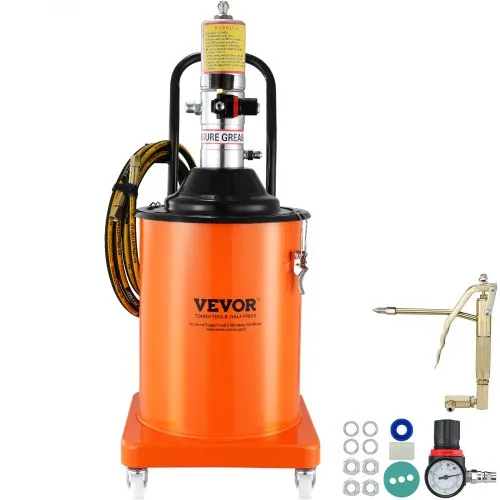
5 Gallon Bucket Grease Pump Models provide balanced capacity and portability. The VEVOR grease pumps with the 5-gallon bucket grease pump design are suited to medium-sized workshops and maintenance plants. The 5-gallon bucket grease pump has a high-pressure 13-foot hose that is mounted on wheels and is freely movable between pieces of equipment. The 5-gallon bucket grease pump has more output than a grease tap pump or a smaller manual system that users upgrading from a grease tap pump need to replace. Most workers use the 5-gallon bucket grease pump because they do not need to refill it often, and it does not get bulky.
Large-Capacity Pneumatic Grease Pump Options, such as the 10.5-gallon and 3-gallon units, provide scalable solutions for various operational demands. The VEVOR grease pumps offer long lubrication life and can be used on construction sites and in fleet maintenance garages. The pneumatic grease pump on wheels increases mobility, allowing technicians to move through tight service bays. Compared with an antique grease pump, which often requires manual operation and whose flow and pressure are not consistent, the pneumatic grease pump provides a consistent flow and pressure throughout.
Portable Lubrication Applications benefit from the 360-degree swivel grease gun head included with the VEVOR grease pumps. The connection between the hose steel and the fittings, whether for servicing agricultural harvesters, excavators, or industrial conveyors, is made flexibly to provide necessary lubrication to hard-to-reach fittings. Where a grease tap pump may have been used in the past in facilities for limited extraction or transfer work, replacing it with a pneumatic grease pump will enhance flexibility and performance. Although an electric grease pump may work for some settings, most professionals prefer the pneumatic grease pump due to its longevity and lower electricity consumption.
Modern Replacement for Antique Grease Pump Equipment is another key advantage of the VEVOR grease pumps. Most workshops that continue to use an antique grease pump often experience inefficiency, leakage, and pressure fluctuations. Updating the old systems to either a 5-gallon bucket grease pump or a high-capacity pneumatic grease pump augments productivity. An old-fashioned grease pump can be nostalgic, but contemporary grease pumps offer better safety, faster operation, and greater control over output. The air-operated system performs reliably, even compared to an electric grease pump, even when the power supply is not constant in an environment.
Grease Pump Maintenance Schedule
Pump type and size decide what you buy; routine care decides how long it keeps full pressure, because air, grit, and hose wear are what take a grease pump out of service.
| Maintenance Task | When to Do It | Why It Matters | What to Watch For |
| Drain moisture from the air line | Daily, before first use | Water in the air corrodes the air motor | Fit an air filter if water spits from the line |
| Keep the follower plate seated | At every refill | Air pockets make the pump lose prime | A pump cycling fast with no grease has lost prime |
| Wipe and cap the bucket or drum | At every refill | Grit in the grease reaches the bearings | Never leave the lid off, since dust ends up in fittings |
| Inspect the hose and swivel | Weekly | Damaged hoses fail under 50:1 output pressure | Replace hoses showing bulges, kinks, or weeping fittings |
| Oil the air motor | As the manual directs, often monthly | Keeps seals supple and cycling smooth | Use only a few drops of air tool oil |
Grease Pump Buying Guide: Optimize Size, Space, and Longevity
Size and Space Requirements are crucial when selecting grease pumps. The VEVOR grease pumps are available in small 3-gallon models for small workshops and in large 10.5-gallon models for high-demand operations. The selection of a 5-gallon bucket grease pump and a larger pneumatic grease pump is determined by the lubrication frequency and the available space to store a large pneumatic grease pump. This wheeled vertical design tends to ensure that the workshop, which has been upgraded on an old-fashioned grease pump, will save space instantly.
Material and Durability determine long-term performance. The VEVOR grease pumps are reinforced with steel and feature parts that won't corrode, making them resistant and durable in harsh conditions. These systems offer greater pressure resistance and a higher workload than a simple grease tap pump. Whereas the electric grease pump might require electrical component repair, the pneumatic grease pump design reduces mechanical complexity and increases longevity. It offers 5-gallon bucket grease pump models, which are highly recommended for their robust frames and even stability during day-to-day industrial tasks.
Power Source and Operational Preference should also be evaluated. One of the facilities can adopt an electric grease pump in the automated systems. Still, most professionals use a pneumatic grease pump to maintain the same level of air-driven performance. The VEVOR grease pumps are also flexible, so a user switching from an old grease pump or a grease tap pump will find they are more efficient and require less maintenance.
Best-Seller Comparison
With sizing and durability covered, all five pumps on the page are compared below by container setup, volume, and mobility so you can match one to how you buy and use grease.
| Product | Container Setup | Reservoir Volume | Mobility | Hose Length | Pressure Ratio | Best For |
| 5 Gallon 20L Air Grease Pump | Bucket included | 20 L (5 gal) | Wheeled bucket | 13 ft | 50:1 | Mid-size bucket pump; the balanced pick for busy workshops |
| 10.5 Gallon 40L Air Grease Pump | Bucket included | 40 L (10.5 gal) | Wheeled bucket | 13 ft | 50:1 | Largest bucket here; fewest refills for fleets and heavy equipment |
| Barrel-Cap Air Grease Pump, 360° Gun Head | Fits your own barrel with the included cap | Set by your barrel size | Moves with the barrel | 13 ft | 50:1 | Only barrel-cap model here; pumps straight from bulk grease drums |
| 3 Gallon 12L Air Grease Pump | Bucket included | 12 L (3 gal) | Wheeled bucket | 13 ft | 50:1 | Smallest bucket here; light-duty shops and limited floor space |
| Air Grease Pump, 360° Swivel Head | Pump unit for your own container | Set by your container | Lightweight pump unit | 13 ft | 50:1 | Lightest unit here; a drop-in upgrade for an existing grease container |
VEVOR Grease Pumps - Turn Insights into Action
The VEVOR grease pump line offers power, durability, and portability for professional lubrication work. From compact 3-gallon models to high-capacity 5-gallon bucket grease pumps and 10.5-gallon systems, the VEVOR grease pumps deliver reliable pneumatic grease pump performance with a 50:1 pressure ratio. Upgrading from an old grease pump or against an electric grease pump, the VEVOR grease pumps are cost-efficient and offer efficient solutions. Arguably, the best way to increase productivity and extend equipment life is to explore the entire VEVOR grease pumps line today and select the most appropriate lubrication system.
FAQs
What is a heavy-duty grease pump and how does it work?
It is an air-driven pump that moves grease from a bulk container to the fittings. An air motor drives a piston, and the 50:1 ratio multiplies inlet air pressure, so 100 PSI of air becomes about 5,000 PSI of grease. A 5 gallon air grease pump works this way.
Can you recommend the best lubrication pumps for heavy machinery?
For heavy machinery, choose a large-reservoir pneumatic pump with a long high-pressure hose so you can work through many fittings without refilling. A 10.5 gallon 40L air grease pump suits fleets and construction equipment, while drum-mount pumps suit sites that buy grease in barrels.
What are the main types of grease pumps used in industrial applications?
The main types are manual lever bucket pumps, pneumatic bucket pumps, pneumatic drum-mount pumps, electric grease pumps, and automatic centralized lubrication systems. Pneumatic pumps dominate shops with compressed air, while automatic systems serve machines with many grease points on a schedule.
Are there any maintenance tips for 5-gallon grease pumps?
Keep the lid sealed and the follower plate seated, refill before the bucket runs dry so the pump keeps its prime, and drain water from the air line daily. Inspect the hose weekly and wipe the gun coupler clean after each session to keep grit out of fittings.
How do I choose the right grease pump for my machinery?
Estimate how many fittings you grease per day, then match reservoir size to that load. Check your compressor's air supply, how you buy grease, and how far the hose must reach. Compare every size and setup in the full grease pump range.
What are the differences between pneumatic, electric, and manual heavy-duty grease pumps?
Pneumatic pumps run on shop air for fast, steady output with few moving electrical parts. Electric pumps need no compressor but carry motors and wiring to maintain. Manual pumps need no power at all, yet they are slower and suit occasional or remote greasing only.
Can a heavy-duty grease pump handle multiple lubrication points simultaneously?
A single-hose pump greases one fitting at a time, though its large reservoir lets you move quickly from point to point. To grease many points at once, you need an automatic centralized lubrication system that feeds grease through divider valves and lines to each point.
What maintenance is required for grease pumps and barrels?
Store barrels sealed, upright, and out of direct sun, and label each with its grease type. Keep the pump intake clean, seat the cap firmly, and inspect hoses and seals regularly. A barrel-cap grease pump keeps the drum sealed while you pump.