Download VEVOR App 

Exclusive £5.00 off for your first three orders on the App.
Scan the QR code to download
A useful selection of concrete mixing buckets designed for DIY projects, home remodeling, and construction sites is available at VEVOR. Our selection is suitable for weekend builders, masons, and contractors alike, ranging from small 5-gallon units for minor repair work to bigger capacity tubs for complete mixing operations. VEVOR's concrete mixing buckets make mixing cleaner, quicker, and easier to handle thanks to their sturdy construction, easy-clean surfaces, and variable material options.
Are you sick of wasting material on each mix and having concrete stick to your buckets? With the right volume, flexible materials, and useful features, VEVOR's concrete mixing buckets let contractors and do-it-yourselfers achieve consistent results without the mess and waste of conventional rigid containers. VEVOR concrete mixing buckets are made to make mixing, pouring, and cleaning concrete faster and easier.
Knowing how much material you need to mix in each batch and which structure will withstand your workload without cracking, warping, or sticking is the first step in choosing the best concrete mixing bucket. Both elements have a direct impact on job productivity and equipment longevity.
The most practical option for minor repair jobs, such as mending steps, filling gaps, installing anchors, or mixing grout, is a small 3- to 5-gallon concrete mixing bucket. These smaller units are easy to clean in between batches, lightweight when filled, and portable to exact application locations. In this size range, a 5-gallon bucket liner also works well; it fits inside a typical rigid bucket to prevent concrete from sticking and for quick, flex-and-peel cleanup between pours.
The small-capacity mixing buckets from VEVOR are compatible with the majority of contractors' and do-it-yourselfers' existing gear since they are sized to fit typical corded and cordless drill-mounted mixing paddles. These buckets' small size also makes them convenient to store in home workshops or on busy construction sites with limited space. Small-capacity units provide all the necessary functions without the bulk of bigger mixing tubs, making them ideal for homeowners doing sporadic repairs rather than continuous construction projects.
A higher-capacity concrete mixer bucket in the 10 to 20-gallon range offers the volume required to finish significant work per batch without frequent remixing for larger pours, such as setting fence posts, mixing mortar for block laying, or preparing concrete for small slab sections. Because each batch is larger and more homogeneous, a larger capacity lowers the total number of batches needed for a project, saving time and guaranteeing more consistent mix ratios throughout the operation.
The wide, sturdy bases and reinforced side walls of VEVOR's large-capacity concrete mixing buckets prevent tipping when actively mixing with a paddle or drill attachment. When loading dry material, shovels can more easily access the broader entrance, which also fits larger mixing paddles. Having a specialized, large-capacity mixing bucket helps contractors on a job site manage multiple tasks simultaneously without bottlenecks during mixing. A 20-gallon bucket of mixed concrete can weigh more than 200 pounds, so always consider the weight of a full load. Before filling, place the bucket near the pour point.
The two most popular materials for concrete mixing buckets are flexible rubber and hard polyethylene. Buckets made of rigid polyethylene are inexpensive, durable, and easily accessible. They stack well for storage and maintain their shape when mixed. However, hardened concrete adheres firmly to stiff plastic surfaces, making cleanup time-consuming and frequently leading to a permanent accumulation of residue that gradually lowers the bucket's useful capacity.
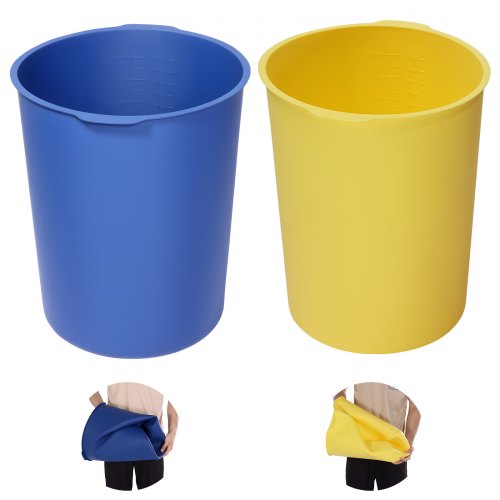
Flexible rubber mixing buckets provide a direct solution to this issue. After the concrete cures, users can twist, flex, and squeeze the bucket thanks to its malleable walls, which cleanly break the binding between the container wall and leftover material. Compared to scraping rigid containers, cleanup is substantially faster with this flex-and-release movement. For concrete, mortar, and resin mixing applications where quick batch turnaround and minimal material waste are essential, VEVOR offers both material types, including silicone and rubber blends. The time savings on cleanup alone make a flexible rubber bucket a sensible long-term purchase for customers who mix regularly.
For consumers who currently own conventional rigid 5-gallon buckets and wish to add non-stick, easy-to-clean functionality without buying brand-new mixing containers, a silicone bucket liner provides an alternative. By forming a flexible inner surface that inhibits concrete adherence and enables the same flex-and-peel cleanup as a specialized rubber mixing bucket, these liners fit straight into a regular bucket.
Designed to fit typical 5-gallon bucket dimensions, VEVOR's silicone bucket liners fit snugly and securely, preventing movement during mixing. The silicone material is similarly beneficial for mortar work, epoxy mixing, and grout preparation because it is chemically inert, meaning it will not react with concrete compounds, resins, or adhesives. Silicone liners are an affordable and useful addition that quickly pays for themselves by reducing cleanup time and material waste for contractors and do-it-yourselfers who want to prolong the useful life of their current bucket inventory while enhancing cleanup efficiency.
Whether a concrete mixing bucket truly wins a spot in your workflow over time depends on its useful characteristics, which go beyond capacity and material, as well as on how well the structure holds up under repeated use on the job site.
Equipment wears down on job sites. Daily, mixing buckets are filled with heavy aggregate, kicked, dropped, and dragged over obstacles. Under this procedure, a bucket that splits, breaks, or deforms causes a mess and material loss, interfering with operations. Thickened side walls and reinforced rim construction are the primary structural elements that distinguish long-lasting job-site mixing buckets from lightweight containers that soon break down in actual operating circumstances.
The strengthened upper rims and structurally sound bases of VEVOR's concrete mixing buckets prevent deformation even under high loads and frequent impacts. On rough or uneven surfaces, rubber versions have a substantial advantage over rigid alternatives due to their natural flexibility, which allows them to absorb impact without cracking. With wide grip profiles that evenly distribute load throughout the hand when carrying, the handle design of VEVOR buckets is rated for the bucket's full load, reducing fatigue during extended workdays.
One of the most time-consuming aspects of any mixing task is cleaning up after concrete, and a bucket designed for cleanup saves significant time over a full workday. Whether made of rubber, silicone, or coated polyethylene, non-stick or low-adhesion interior surfaces keep more usable concrete in the mix and reduce the amount that adheres to the container wall at the conclusion of each batch.
With smooth interior walls that easily release cured residue, VEVOR's flexible rubber mixing buckets and 5 gallon bucket liners are specifically engineered to address cleanup challenges. Additionally, when water cleanup between material types is required, wide bucket openings speed up rinsing and scouring. A fast-cleaning bucket is a true productivity tool for experts who mix several materials in one workday, such as concrete in the morning, mortar at noon, and epoxy in the afternoon. This feature keeps the operation running without lengthy equipment maintenance stops between activities.
From small 5-gallon bucket liners for fast patch jobs to large-capacity rubber concrete mixer buckets for larger building projects, VEVOR's concrete mixing buckets meet all of your mixing needs. VEVOR offers affordable, long-lasting mixing solutions with flexible silicone alternatives, a strengthened structure, and easily cleaned surfaces. Choose the ideal mixing bucket for your upcoming project by browsing the entire selection now.
For tiny patch work, anchor setting, and crack repairs, a 3- to 5 gallon bucket works best. This size generates enough material per batch for the majority of small repair jobs with minimal waste, is portable, and works with standard drill mixing paddles.
Yes, VEVOR silicone bucket liners are designed to fit the dimensions of a typical 5-gallon bucket. They prolong the useful life of your current rigid bucket inventory by preventing concrete from adhering to the bucket walls and enabling quick flex-and-peel cleanup.
After concrete cures, rubber mixing buckets stretch, providing a clean, scrape-free release for the residue. As a result, each batch requires a lot less cleanup time. Rubber is more resilient to the physical rigors of active job-site use since it does not crack when struck.
Yes, you may mix mortar, grout, epoxy, resin, and adhesives using VEVOR mixing buckets and silicone liners. These chemicals will not react with chemically inert rubber and silicone materials, making them adaptable to a variety of trades and project types.