Beer Brewing Barrel












Results for Beer Brewing Barrel
Browse VEVOR's comprehensive range of beer brewing systems for beginners, home brewers, and small-batch brewers. Whether you're brewing in a single-vessel electric brew kettle or a full multi-vessel setup, VEVOR has you covered at every stage, from mashing and boiling to fermentation and kegging. VEVOR provides a beer brewing system that fits almost any kitchen, garage, or dedicated brew area, with a variety of capacities and power sources to choose from.
VEVOR Beer Brewing Systems for Every Home Brewing Setup and Skill Level
Thinking of brewing your own beer at home but not sure which kit fits your space? VEVOR offers beer brewing systems from small electric kettles to full multi-vessel rigs, providing hobbyists and serious home brewers with the equipment they need to mash, boil, ferment, and package beer with consistent, repeatable results in any kitchen or garage. All beer brewing machines are built for longevity and ease of use, making the transition from extract brewing to all-grain brewing easy.
Electric Beer Brewing Systems: Power Source and System Types
For traditional beer brewing systems, the power source is often the first choice. VEVOR's electric systems provide regulated, consistent heat without an open flame.
How Electric Heating Elements Improve Brewing Consistency
Precise mash and boil temperatures can be hard to achieve with traditional propane burners that create hot patches and uneven heat. VEVOR electric beer brewing systems include built-in heating elements that spread heat evenly across the kettle, avoiding scorching grains or uneven caramelization. This matters most during the mash, where even a few degrees of variation can affect how efficiently starches convert to fermentable sugars.
Electric components also heat faster than many people think. Because the power output is adjustable, you can set it for a slow simmer or a rolling boil without constantly regulating a flame. When brewing at home indoors, in a garage, or on an apartment balcony, electric heating eliminates the need for propane tanks and open flames, making it safer around youngsters and pets and in tight spaces.
The heating element is in direct contact with the liquid. The liquid loses less energy to the surrounding air than gas burners. That efficiency means less time between brewing stages to heat up, so a whole brew day goes quicker. If you are new to comparing beer brewing systems, one of the biggest factors affecting the ease and quality of the final beer is the heating technique.
Single-Vessel vs Multi-Vessel Electric Systems
Two main types of electric brewing systems exist: single-vessel and multi-vessel. A one-vessel home brewing system combines mashing, boiling, and occasionally even the whirlpool phase into one pot so you have less clean-up, and the appliance takes up less counter or floor space. This configuration is perfect for starting-out brewers or brewers in tiny kitchens where you can't keep many kettles.
Multi-vessel systems divide the operation into distinct vessels for hot liquor, crushing, and boiling. This allows you to conduct stages in parallel, like heating sparge water while the mash is still resting, shaving actual time off a brew day. Brewers making larger batch volumes or wanting more control over each step choose multi-vessel setups.
No single setup is correct; it depends on your available space, batch size, and how hands-on you want brew day to be. VEVOR lets you start with a compact single-vessel setup and later upgrade to a multi-vessel system as your brewing practice grows. VEVOR's range of beer brewing systems offers options for every brewer.
Digital Controls and Temperature Precision
Many VEVOR 8-gallon electric beer brewing systems feature digital control screens that allow you to set and monitor target temperatures during the brew. Instead of guessing based on flame height, you can program a mash temperature and let the device keep it within a set range, delivering more predictable results from batch to batch.
Some models even have programmed timers for boil duration or hop additions so you're not trapped watching the kettle for the whole session. This is especially nice for brewers who like to multi-task on brew day, whether it's making yeast, sanitizing fermenters, or just stepping away for a few minutes without worrying about a boilover.
Temperature accuracy matters most during mashing, when even slight variations can affect the beer's final body and sweetness, and during the boil, where a continuous rolling boil helps with hop use and protein coagulation. Digital displays also make it easier to record your process and recreate a recipe precisely the following time you brew.
Digital controls often separate a basic kettle from a full brewing setup designed for reliable, professional-quality results at home. For brewers looking into beer brewing systems based on features, not simply size,
Safety and Convenience Advantages of Electric Brewing
Removing an open flame from the brewing process offers significant safety benefits, especially for anyone brewing indoors or in a garage with limited airflow. 16-gallon electric beer brewing systems remove the hazards of propane leaks, carbon monoxide buildup, and the fire risk of an open burner near flammable materials or spilled wort.
Electric installations are also easier to tidy. Many kettles have smooth interiors that are easy to clean, and some VEVOR models have false bottoms or filter screens to help decrease the mess of separating grain from wort. 16-gallon electric systems also use less garage or shed space between brew sessions, with no propane tank to store or fill.
Electric brewing offers alternatives that are not available with gas burners. This is especially true for apartment residents or anyone without outside access, as many governments forbid cooking with open flames on balconies or in common areas. Indoor brewing is possible when the heat source is contained and regulated.
Many home brewers are shifting to electric setups when upgrading equipment because of consistent heat, digital control, and reduced fire risk. Electric brewing rigs are worth the cost over a typical propane rig if safety and convenience are factors.
Capacity and Components of VEVOR Beer Brewing Systems
Beyond the power source, how much beer you can brew and how streamlined the process feels depends on the system's capacity and included components.
Matching Batch Size to Kettle Capacity
When you're looking into beer brewing systems, one of the first characteristics you'll want to consider is kettle capacity. This defines your maximum batch size. VEVOR's kettles range from smaller sizes for 5-gallon batches to larger vessels for bigger runs, so you may choose based on how much beer you actually want to drink or distribute.
A good rule of thumb is to choose a kettle with headroom above your planned batch capacity, because you need space for foam during the boil and for grain absorption during the mash. If the kettle is too small, it will boil over; if it is too large for your quantity, it can be harder to maintain a consistent boil.
If you plan to increase output over time, it's usually better to buy a larger system up front than to upgrade again in a year. Many home brewers start with 5-gallon batches and then move to a 16-gallon brewing system after perfecting their recipes and wanting to brew less often while producing more beer each session.
Also consider your storage space, since larger kettles and pots need enough clearance to move safely while full of boiling liquid.
Essential Components: Kettles, Fermenters, and Accessories
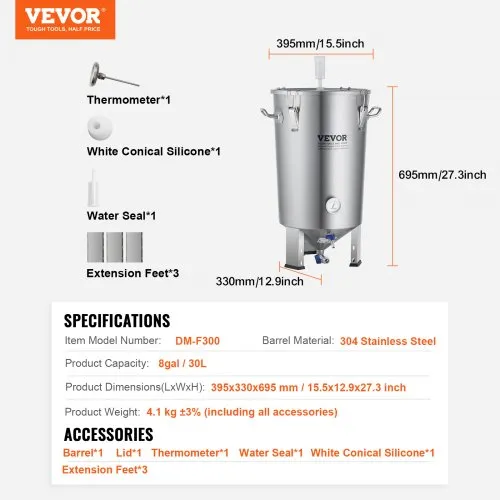
It's not just a kettle; it's a complete equipment setup. Most beer brewing systems contain a stainless steel brew kettle, a fermenter, and accessories such as thermometers, airlocks, and hoses for transporting liquid between vessels. Stainless steel is a good choice because it won't corrode, won't pick up flavors from previous batches, and can withstand repeated cleaning.
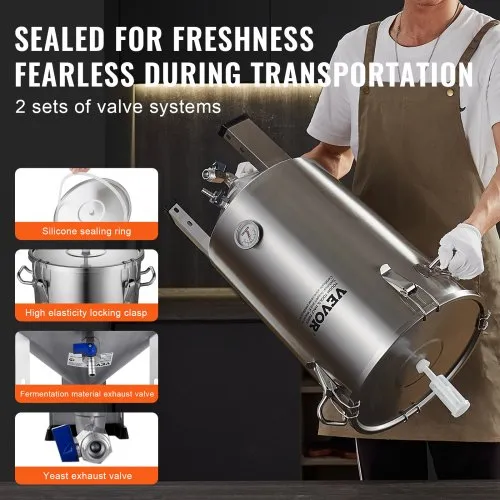
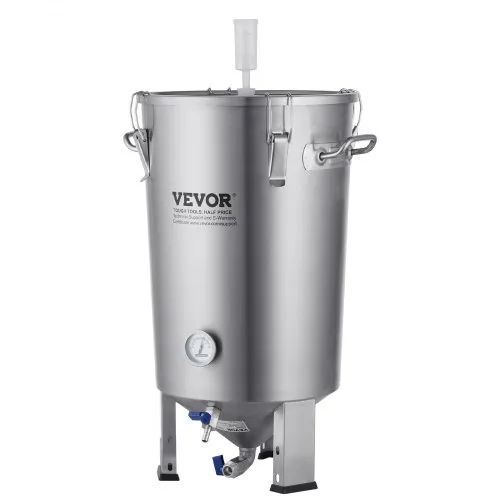
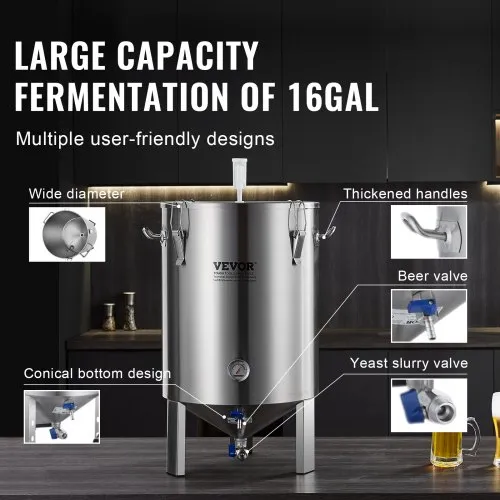
The fermenters demand special attention, for here is where the real conversion of sugar to alcohol takes place, over a period of one to two weeks or more. With a stainless steel pressure fermenter, you can ferment and carbonate in one vessel, which means fewer transfers and less chance of oxidation or contamination than with separate buckets and bottling equipment.
Other items to consider include fake bottoms or mesh filters to keep spent grain separate, silicone tubing for hygienic transfers, and digital thermometers to accurately monitor mash and fermentation temperatures. Some brewers might find it easier to buy these components in complete kits, since it saves them the trouble of sourcing the elements separately.
When considering kits, double-check what's included versus what you'll need to buy separately. A basic kettle and a fully outfitted system can make a big difference in how ready you are to brew on day 1.
Why Choose VEVOR Beer Brewing Systems?
VEVOR offers electric and multi-vessel beer brewing systems, stainless steel kettles, and pressure fermenters for home brewers, so you can build a system that fits your space, batch size, and experience level. Every part is built to last, is easy to clean, and gives consistent results batch after batch. Whether you're brewing your first 5-gallon batch or upgrading to a full electric beer making system, the VEVOR beer making machine is backed by reliable after-sales service. Check out the full lineup today and find the beer brewing system that suits your next brew day.
FAQs
What's the difference between electric and propane beer brewing systems?
Electric brewing systems use internal heating elements to generate steady, controllable heat without an open flame, making them safer for indoor use. Propane burners heat faster outdoors, but they can create hot spots; electric systems are ideal for garages, flats, or rooms without outdoor access.
How much capacity do I need for my first home beer brewing system?
Most beginners start with 5-gallon batches, which will produce around two cases of beer. Get a kettle that's just a bit bigger than the volume you want to brew. This prevents boil-overs and lets you scale up later if you want to brew bigger.
Can I ferment and carbonate in the same vessel?
Yes. A stainless steel pressure fermenter lets you ferment and carbonate beer in one sealed vessel, which reduces transfers and the chance of oxidation compared with using separate fermenting buckets and bottling equipment.
Are electric brewing systems safe to use indoors?
Yes, electric systems eliminate open flame and propane, making them safer for kitchens, garages, and flats with limited airflow. Always observe the electrical and water safety precautions given by the manufacturer. Place the beer brewing systems on a stable, heat-resistant surface.
What accessories come with a complete brewing system?
Complete kits will often contain a brew kettle, fermenter, thermometer, airlock, and tubing for transfers. Some even add artificial bottoms or mesh filters to remove grit. Please refer to each kit's specifications; included components vary by system.