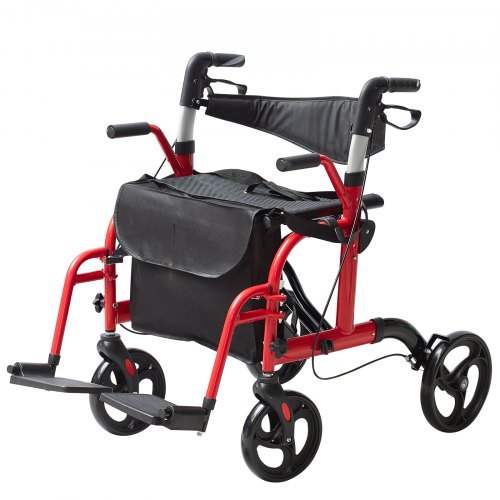
VEVOR Walkers for Safe, Comfortable Mobility Across Every Age Group and Recovery Need
Are you searching for a supportive solution that makes recovery from an injury easier at home or a reliable mobility aid that keeps a loved one moving safely? The proper walkers offer independence, stability, and self assurance without limiting mobility or causing discomfort when used regularly. VEVOR offers suitable options for a wide range of users and circumstances, from lightweight walkers for indoor therapy to smooth rolling manual walkers for outdoor use to interactive baby stationary walkers for infant growth.
Choosing the Right Walkers by Type and Mobility Features
The two main factors that affect how effectively a walker works for its intended user in their specific daily surroundings are the walker type and integrated mobility features. Every major walker category is covered by VEVOR's range, which clearly describes mobility features, making it easy to match the appropriate model to the user's living situation, activity level, and physical condition.
Smooth Mobility for Active Daily Use
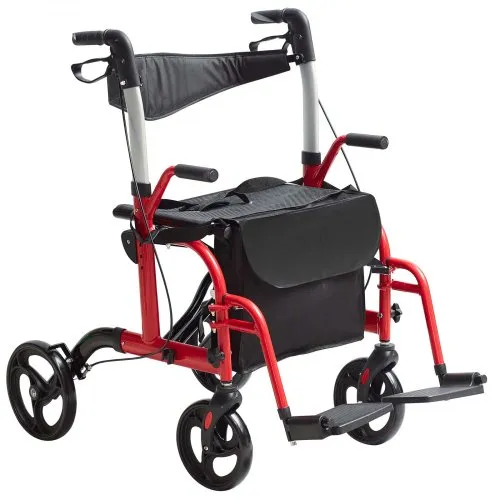
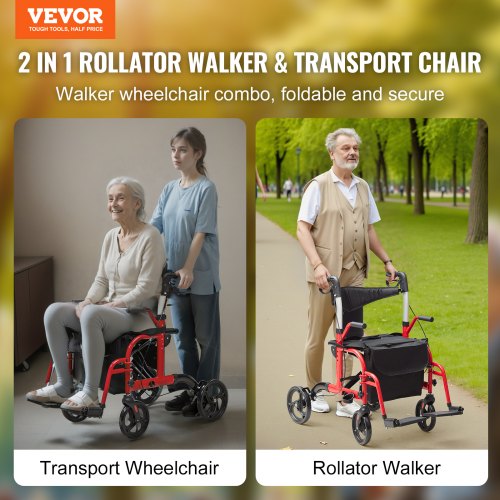
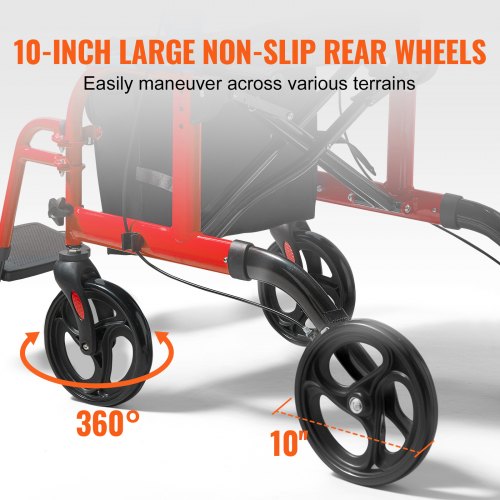
The smooth, rolling action of a rolling walker, also known as a rollator, replaces the lift-and-place motion of a standard walker, enabling users to maintain a more natural walking pace without breaking stride at each step. The four-wheel configurations of VEVOR feature 6-inch and 8-inch wheel diameters. On outdoor surfaces like cracked pavement, door thresholds, and other minor surface irregularities, where smaller wheels lose momentum and require more effort to push, the larger wheel size offers noticeably better performance.
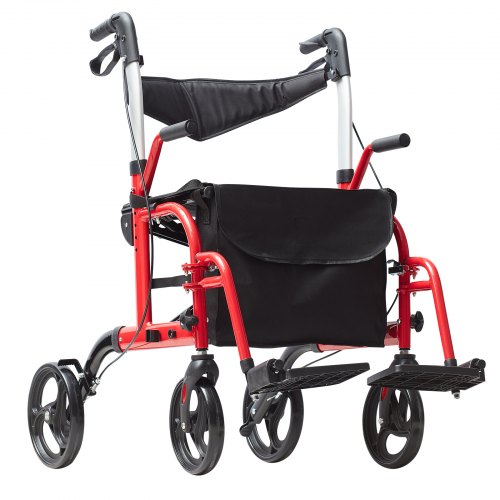
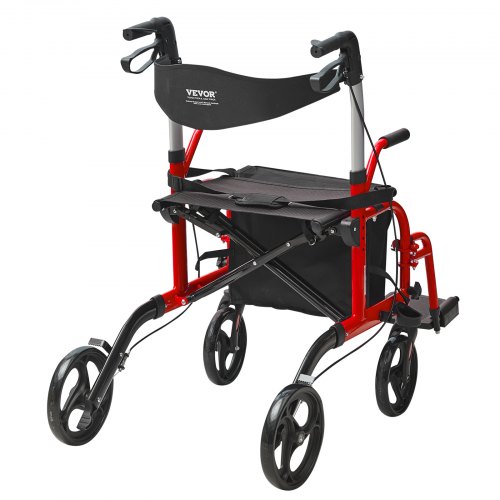
When the user pauses to rest or sit, VEVOR's rolling walkers' loop-style hand brakes engage by pressing the handlebar levers, instantly locking the rear wheels to stop the walker from rolling away. All VEVOR rolling walker models come with integrated padded seats that offer a handy rest alternative without the need for a separate chair. Additionally, under-seat storage pockets hold daily necessities, personal belongings, and medications, allowing users to move freely without carrying a separate bag. For active elderly and recuperating patients who spend a lot of time traveling between rooms, outside, or in public places, the rolling walker is the most convenient daily-use walker, thanks to its features.
Maximum Stability for Rehabilitation and Indoor Use
The best mobility aid right after orthopedic surgery, hip or knee replacement, stroke rehabilitation, or any condition requiring substantial weight-bearing support during ambulation is a standard walker, as it offers the highest level of stability among adult walker types. The lightweight aluminum alloy frames used in VEVOR's regular walker models weigh between 3.5 and 5 pounds, providing strong structural support without the added weight that makes repeated lifting taxing for users with weak upper bodies.
In the early stages of rehabilitation, when controlled, deliberate movement is clinically preferred over continuous rolling, these are more stable than rolling alternatives because the user must lift the frame forward with each step rather than continuously rolling it. Pre-fitted rubber tips on all four legs of VEVOR's regular walker frames provide non-slip floor contact on hardwood, tile, and low-pile carpet surfaces. For users switching between full lift walking and rolling ambulation during progressive rehabilitation, front-wheel attachment kits are available as accessories. This enables the same VEVOR walker frame to function across multiple phases of a recovery program without requiring the purchase of additional equipment at each transition.
Targeted Lower Leg Injury Support
A knee scooter helps people recovering from foot, ankle, or lower leg injuries who are unable to bear weight through the injured limb but still have full strength and function in the opposite leg. This is a specific mobility demand that neither a standard walker nor a rolling walker can adequately meet. With VEVOR's scooter versions, users may drive the scooter forward with the unaffected leg while resting the injured leg on a padded knee platform. This smooth, effective movement is faster and less taxing than crutch-based mobility on most indoor and outdoor surfaces.
To accommodate users with different leg lengths, VEVOR's scooters feature a padded knee platform that can be adjusted in height. This ensures the wounded knee rests comfortably without undue strain on the joint during forward propulsion. VEVOR's scooters have a compact turning radius thanks to four-wheel steering and a handlebar-mounted turning mechanism, making them suitable for indoor residential environments, narrow hallways, and retail stores where agility in limited quarters is just as crucial as forward rolling speed. The safety concern most frequently voiced by first-time knee scooter users switching from crutches is addressed by front and rear hand brakes, which provide confident stopping control on both level and slightly sloped surfaces.
Safe Mobility for Infant Development
When selecting a safe, developmentally appropriate mobility product, parents must be aware of the differences between baby walkers and baby stationary walkers, which play complementary yet distinct roles in an infant's motor development. The mobile baby walker models from VEVOR feature a wheeled base with a fabric seat ring that supports the infant in an upright sitting position, allowing them to push and move the device across smooth floor surfaces with their legs. This helps babies aged 6 to 10 months develop their lower-body strength and coordination.
In contrast, baby stationary walkers put the infant in a fixed position while they bounce, spin, and engage with linked toys and sensory features. They offer the same supporting seat and activity tray layout without the wheeled base. In settings where floor-level mobility poses a risk of falls from stairs or thresholds, parents and pediatric health guidelines favor this approach. The baby stationary walker models from VEVOR feature detachable activity trays with integrated toys, sounds, and textures that promote sensory development and physical activity during each walker session, machine-washable fabric seat inserts for hygiene, and multi-height seat adjustment to grow with the infant over several months of use.
Selecting Walkers by Weight Capacity and Adjustability
The two features that most directly affect whether a walker fits its user safely and pleasantly for continuous daily use during weeks and months of rehabilitation or ongoing mobility support are weight capacity and height flexibility.
Weight Capacity Ratings: Matching the Walker to the User
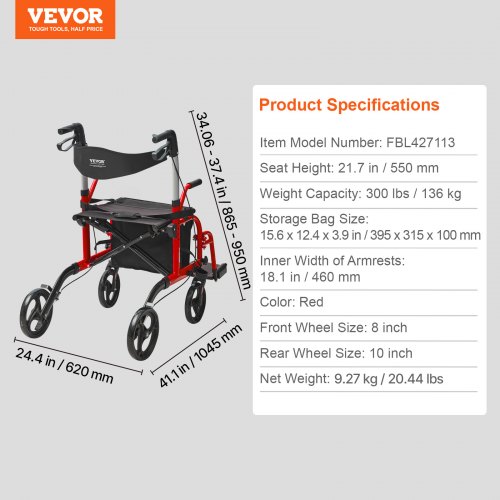
Every walker has a stated maximum weight capacity. Choosing a model rated lower than the user's body weight poses a safety risk because it compromises frame integrity under the dynamic loading during normal ambulation, especially during the push-off phase of each step, when momentary forces greatly exceed static body weight. The regular and rolling walker models from VEVOR are available in heavy-duty versions rated at 400 pounds and standard-capacity versions rated at 300 pounds. Each product page clearly labels these options to make selecting easier.
The majority of VEVOR's scooter models have a weight capacity of 300 pounds, reflecting the concentrated loading on the knee platform and front wheel assembly during active propulsion. VEVOR's heavy-duty rolling walker models offer a 28-inch wide frame configuration along with a 400-lb weight rating for bariatric users who need a rolling walker with a wider frame, wider seat, and reinforced wheel axles to safely support higher body weights. This ensures comfortable seating width and structural margin for users of all body sizes. A significant safety buffer against dynamic loading during daily use is provided by always choosing a walker rated at least 10% above the user's current body weight.
Height Adjustability: Fitting the Walker to Every User
One of the most clinically significant factors in choosing a mobility aid is the appropriate walker height. A walker set too low puts the user in a hunched position, increasing back pain and decreasing stability, while a walker set too high causes shoulder elevation and elbow overextension, which quickly wear out the upper body during prolonged use. Adult walkers by VEVOR have independent push-button height adjustments for each of their four legs. Standard models have an adjustment range of 32 to 39 inches, accommodating users with standing heights of roughly 5 to 6 feet 2 inches.
A comfortable 15 to 20 degree elbow bend during regular use results from the proper walker height, which places the handlebar level with the user's wrist crease when standing upright with arms relaxed at their sides. This effectively distributes load through the forearm and shoulder without causing joint strain. To accommodate infant growth during the usual six to twelve-month usage window, VEVOR's baby walkers and baby stationary walkers feature seat height adjustment in three to five positions. This ensures that the product stays properly fitted as the child grows rather than becoming uncomfortable or developmentally inappropriate within weeks of initial setup. The tool-free push-button or pin-lock methods used by all VEVOR height adjustment mechanisms do not require any mechanical expertise to function properly and safely.
Why Choose VEVOR Walkers for Mobility and Recovery Support?
VEVOR offers a full line of walkers, including manual rolling walkers, scooters, and baby walkers. All of these walkers are made of sturdy materials, have clear weight capacity ratings, and are reasonably priced with dependable after-sales support. Most users can find a suitable walker from VEVOR, whether for daily elder mobility, post-surgery recovery, or infant motor
FAQs
What is the difference between a rolling walker and a standard walker?
Rolling walkers are ideal for active people with a reasonably steady gait because they use wheels to move forward continuously. In early recovery stages following surgery or injury, when controlled, deliberate movement is clinically favored over a rolling gait; a standard walker is preferred, as it requires raising with each step, offering better stability.
What weight capacity do I need in a VEVOR walker?
To allow for dynamic loading during ambulation, choose a walker with a listed weight capacity at least 10% higher than the user's current body weight. The majority of adult users across regular and bariatric sizes are covered by VEVOR's basic models, which support up to 300 pounds, and its heavy-duty versions, which support up to 400 pounds.
At what age can a baby use a VEVOR baby walker?
Babies between the ages of six and ten months who can sit with little assistance and hold their head upright are usually suitable candidates for baby walkers. In situations where floor-level movement near staircases or thresholds poses a fall danger, utilize baby stationary walkers and always keep an eye on infants using mobile walkers.
How do I set the correct height on a VEVOR adult walker?
Maintain a straight posture while keeping your arms at your sides. To fit your wrist crease, adjust the walker handlebar. When used, this results in a 15 to 20 degree elbow bend that comfortably distributes load across the shoulder and forearm without straining the joints during prolonged, everyday walking.
Can VEVOR knee scooters be used outdoors on uneven surfaces?
Smooth interior and outdoor surfaces, such as tile and paved surfaces, are ideal for VEVOR scooters. Choose models with larger front wheels for better rolling stability on slightly uneven outdoor terrain. Steep inclines, loose gravel, and grass are not safe for the scooter's wheels and steering, so avoid them.