Deals
Deals by Categories




More Ways to Save

Best Sellers
Best Sellers by Categories
New
New by Categories

Download VEVOR App 

Get £5.00 Off £99.00+ Orders on Your First 3 App Orders
Scan the QR code to download


+12
More







Features & Details
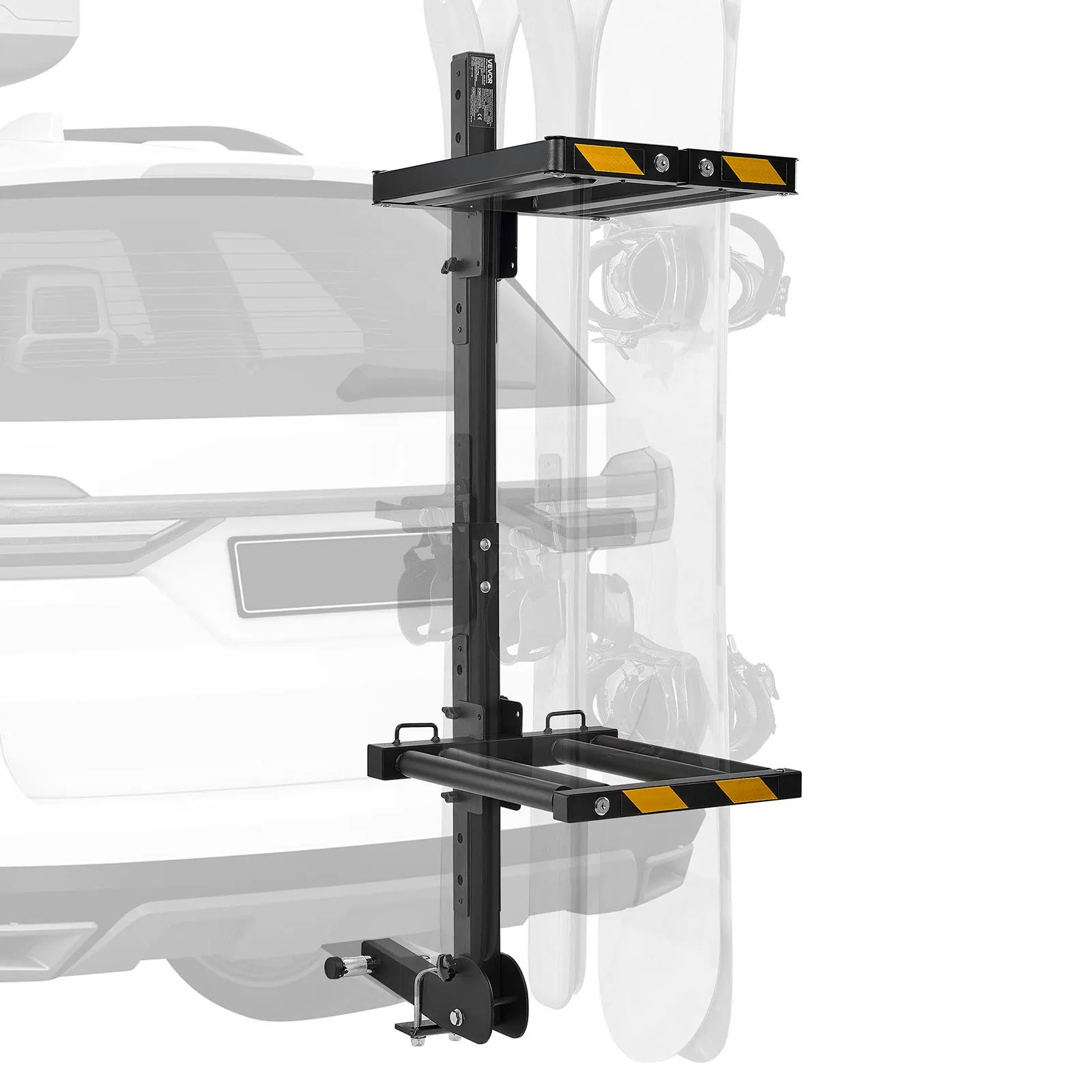
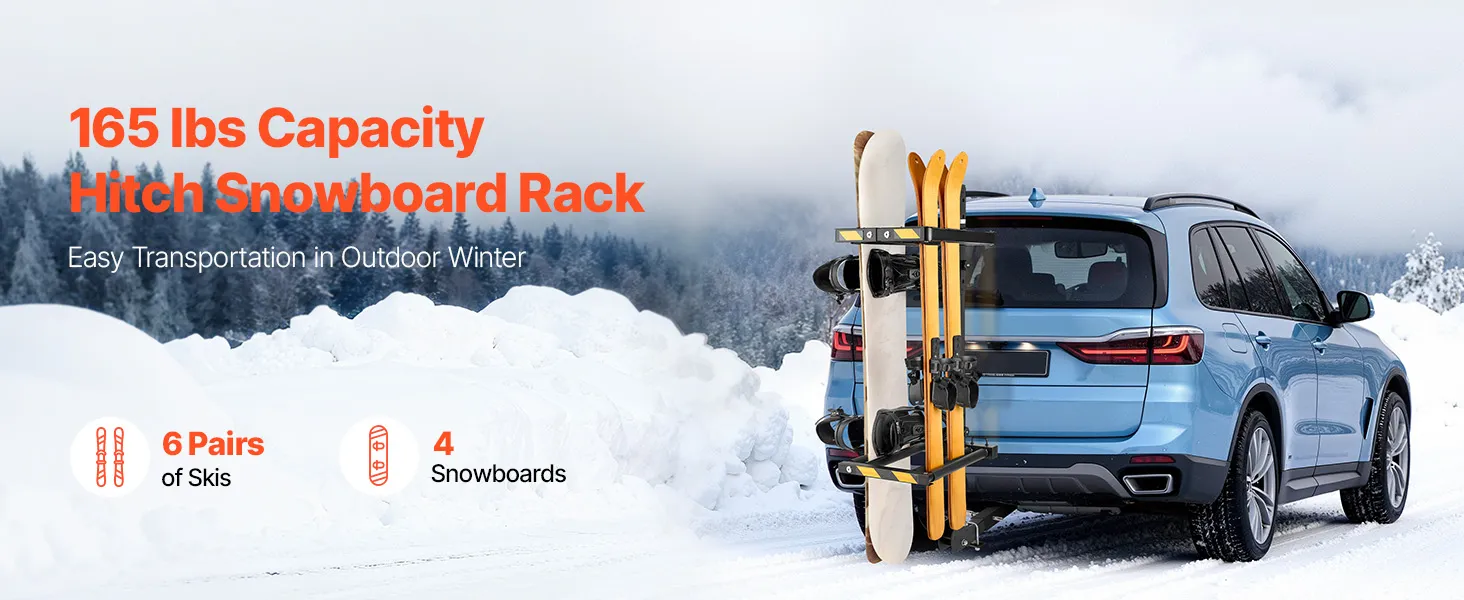
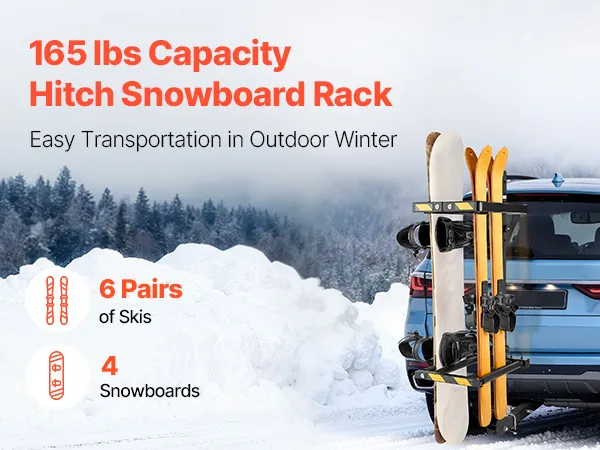
- Large Capacity: This hitch mounted ski & snowboard rack holds up to six pairs of skis or four large snowboards, with a max load of 165 lbs (75 kg). It also works for skateboards and other outdoor gear, providing versatile storage and transport options
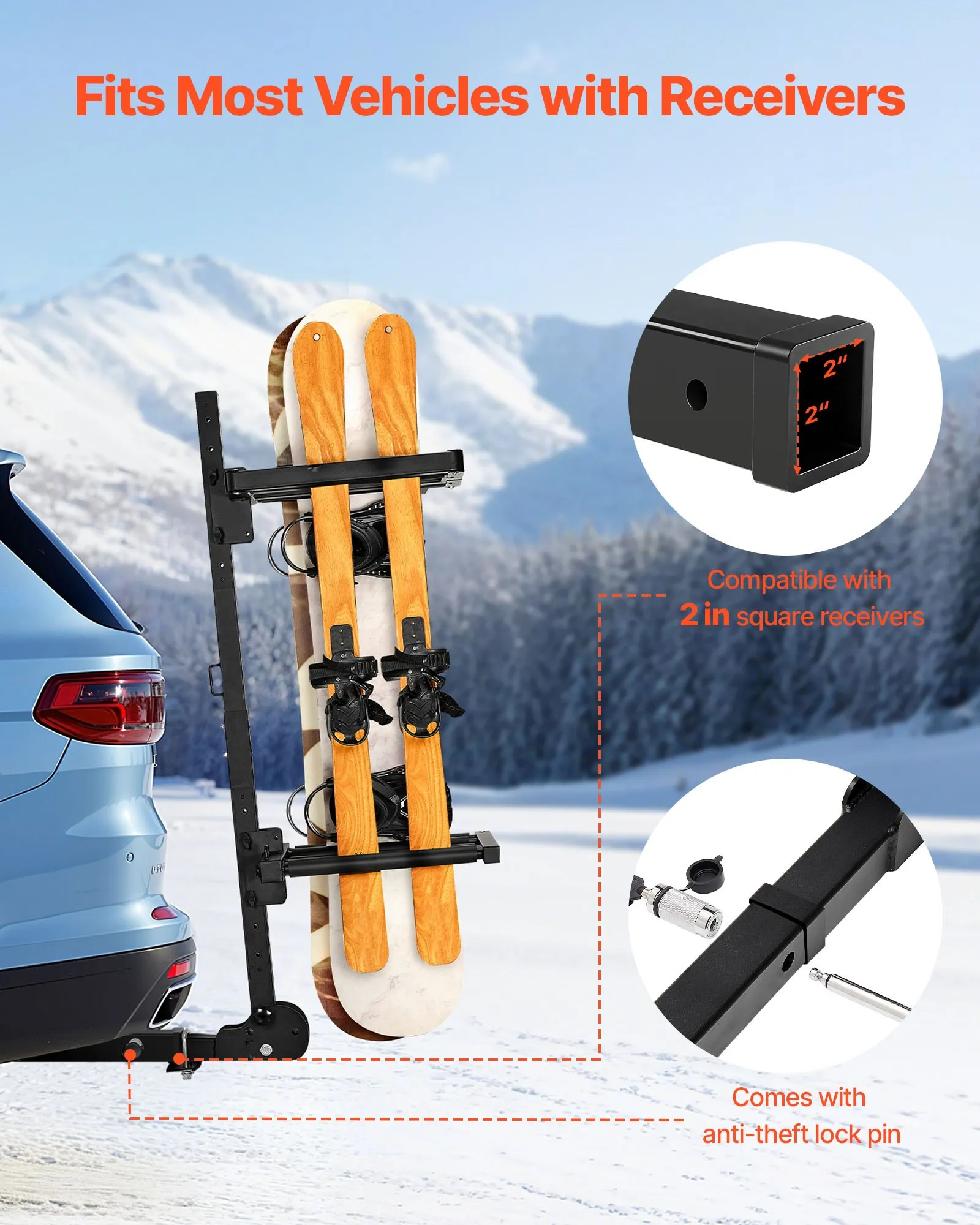
- Wide Compatibility: The hitch ski rack fits vehicles with a 2-inch (50 mm) hitch receiver. It secures your gear with an anti-theft hitch pin for stable transport. The quick, tool-free installation ensures a firm lock for reliable outdoor trips
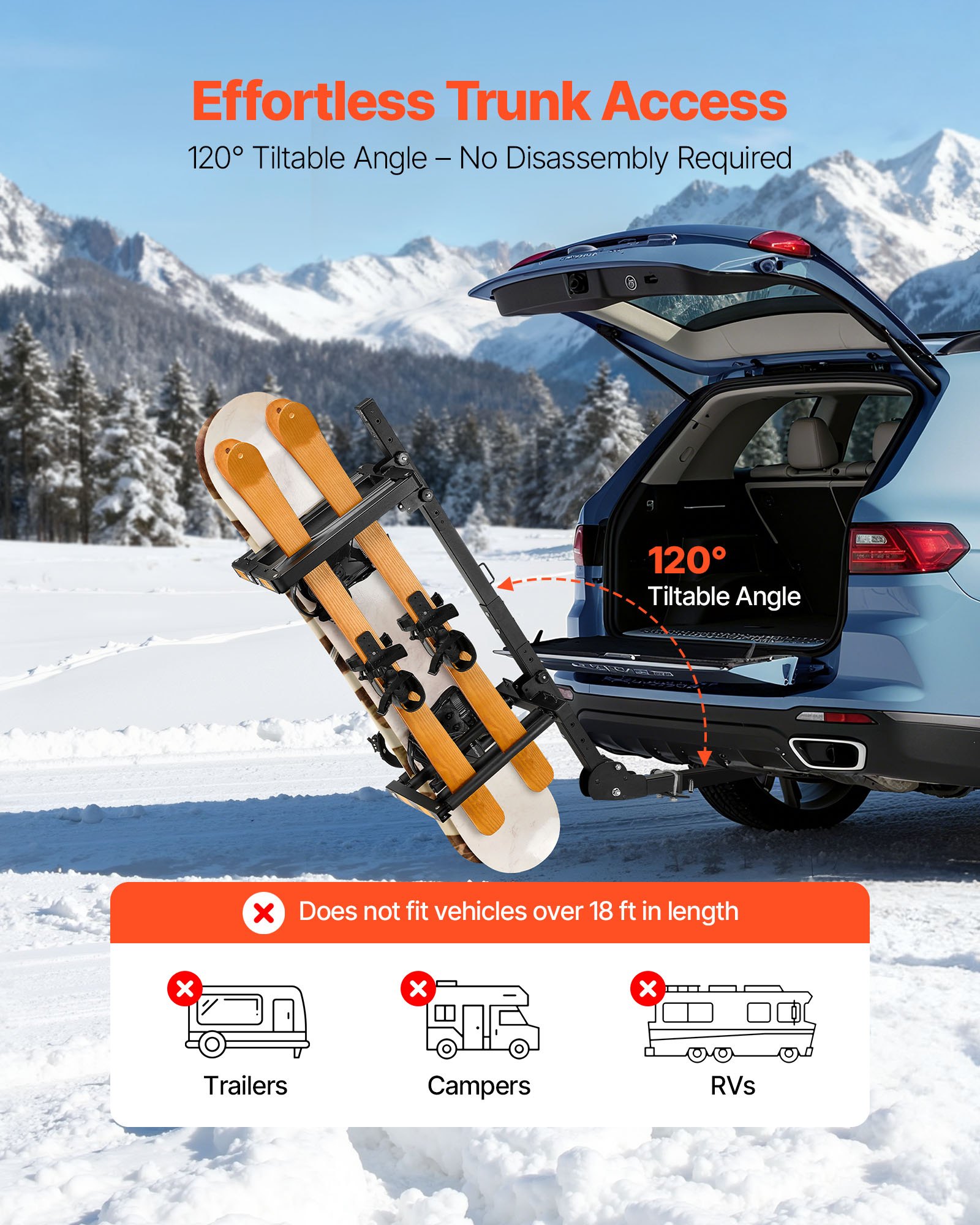
- Tilt Design: Our hitch ski snowboard rack supports a 120° tilt, allowing you to open the trunk without detaching the rack. Not suitable for vehicles over 18 ft in length, including trailers, campers, and RVs. Please check your vehicle size before purchase
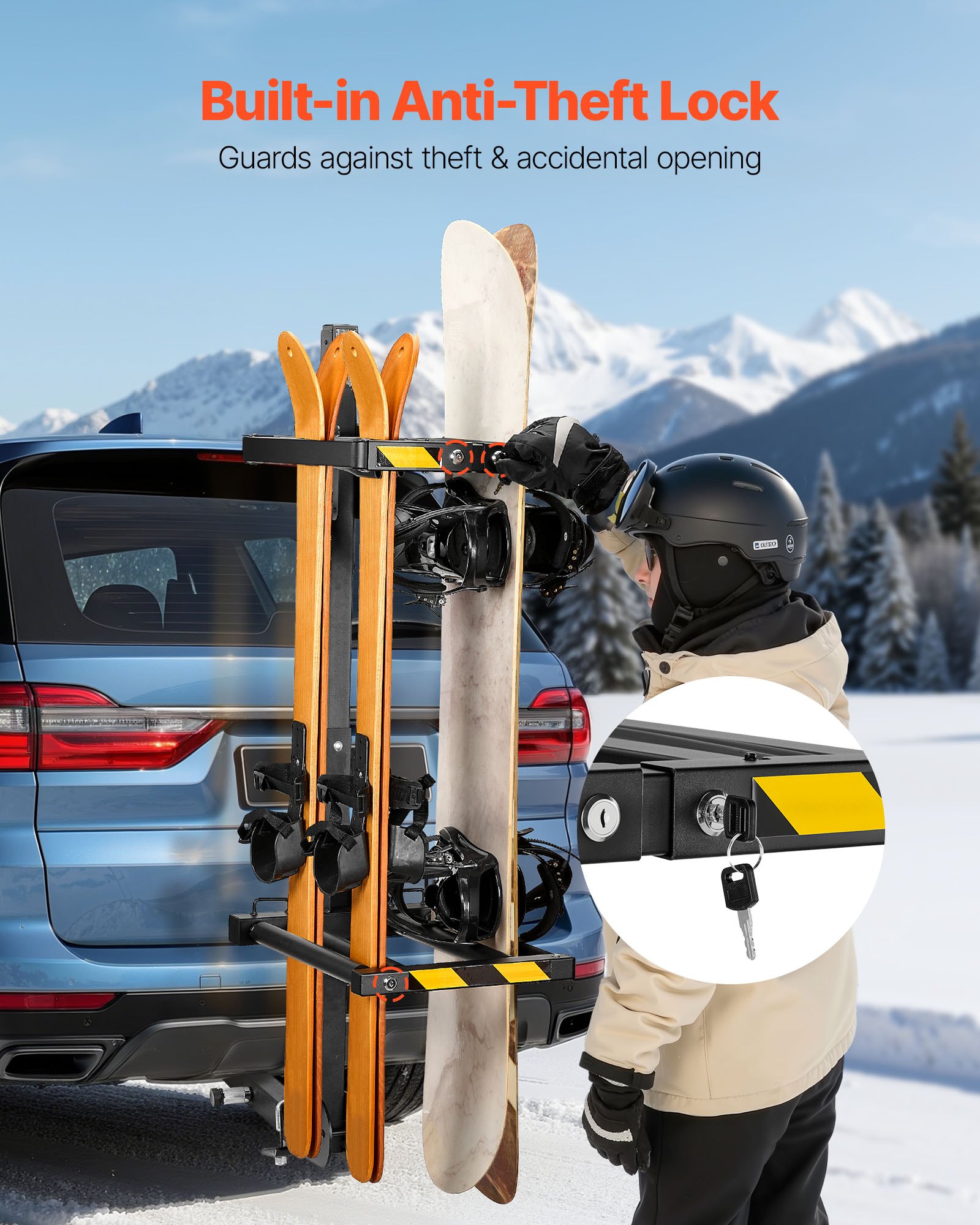
- Anti-Theft Lock: This ski snowboard carrier rack adopts an anti-theft lock to keep your gear secure during travel and resist accidental opening. The built-in security strap provides extra stability, ensuring your equipment stays firmly in place
- User-Friendly Design: Built with durable Q235 steel and padded with thick rubber, this lockable ski & snowboard rack holds gear firmly without scratching. Reflective strips improve visibility, while the adjustable, foldable shelves save space for storage
Frequently Bought Together
Reviews 0.0
All reviews are from verified purchases
Average rating based on 0 reviews
Reviews 0.0
All reviews are from verified purchases
See all 0 reviews
About this item
Product specification
- Item Model Number
- RN-2101
- Loading Width
- 15.75 in/400 mm
- Number of Items
- 1 Set
- Net Weight
- 40.57 lbs/18.4 kg
- Product Dimensions (Unfolded)
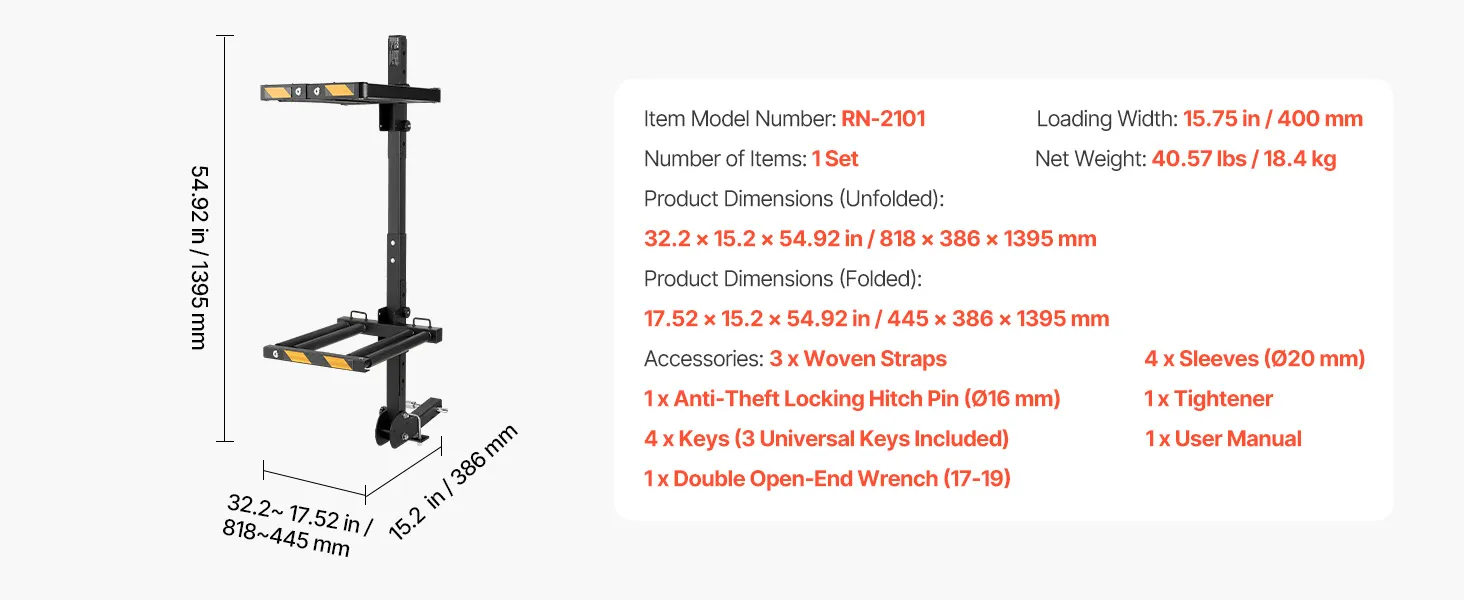
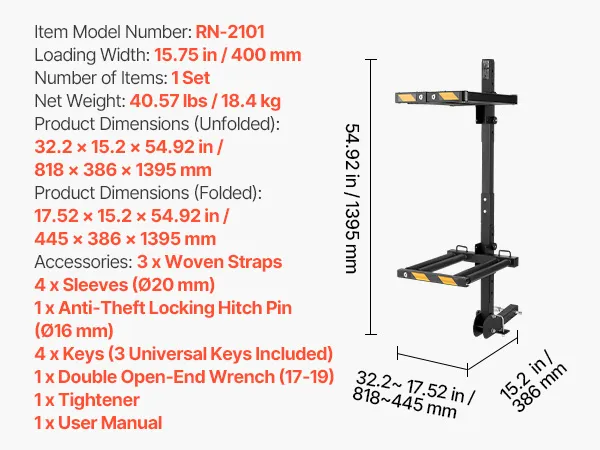
- 32.2 x 15.2 x 54.92 in/818 x 386 x 1395 mm
- Product Dimensions (Folded)
- 17.52 x 15.2 x 54.92 in/445 x 386 x 1395 mm
Description


Universal Snowboard Rack
This hitch mounted ski & snowboard rack features an anti-theft lock for security and easy installation. The soft rubber pads resist scratches and damage and keep skis firmly in place, delivering reliable and convenient transport.


Unlike roof racks, this hitch ski rack lets you load and unload skis without climbing on top of your car. Designed to fit most vehicles with a 2-inch hitch receiver, it ensures convenient use with proper ground clearance at the top and bottom brackets.
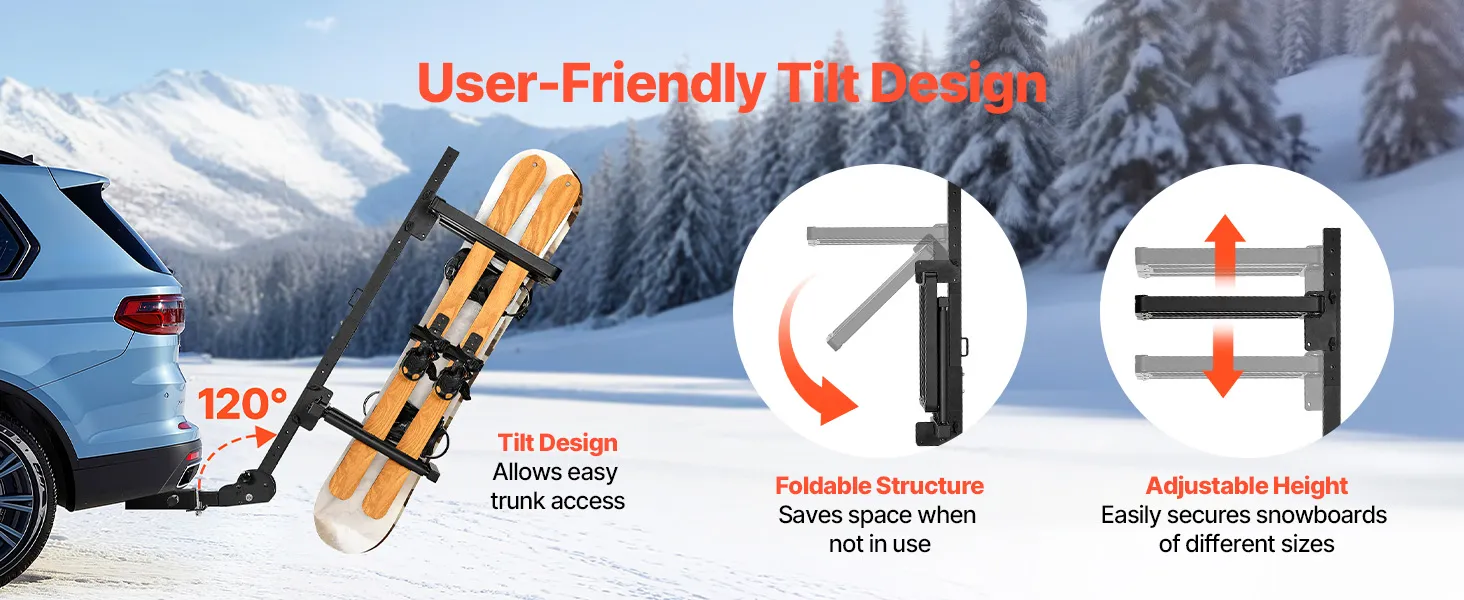
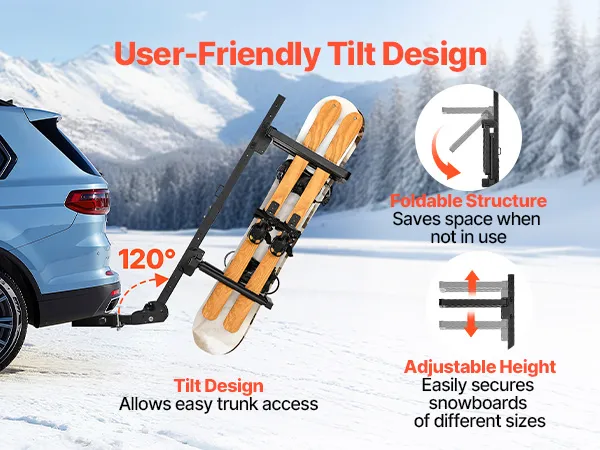
Tilting the handle downward, the hitch ski snowboard rack allows you to open the trunk without detaching the rear ski rack. For secure use, please hold the rack and lower it slowly when tilting.
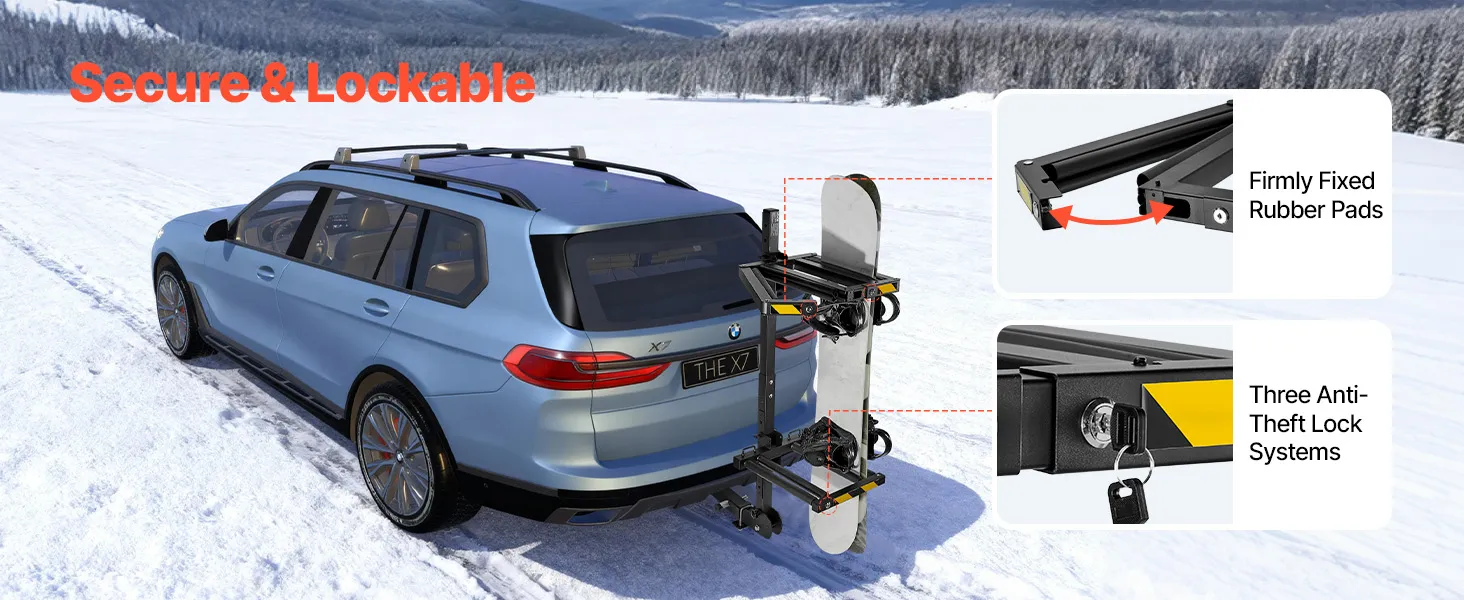
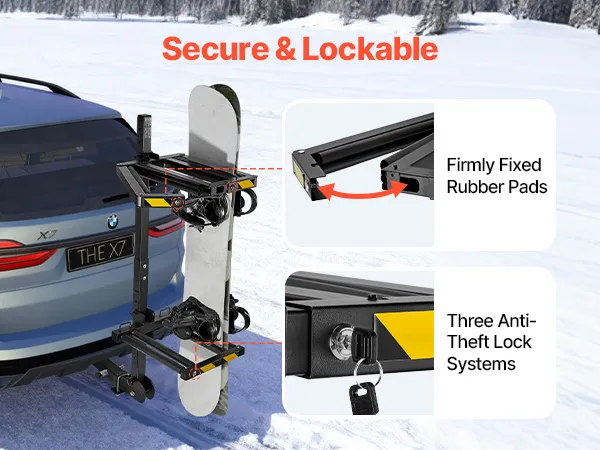
Built-in anti-theft lock, this ski snowboard carrier rack resists theft or accidental opening during outdoor use, quickly securing your skis. The soft, thick rubber pads grip skis firmly in place without scratching or damaging your gear.
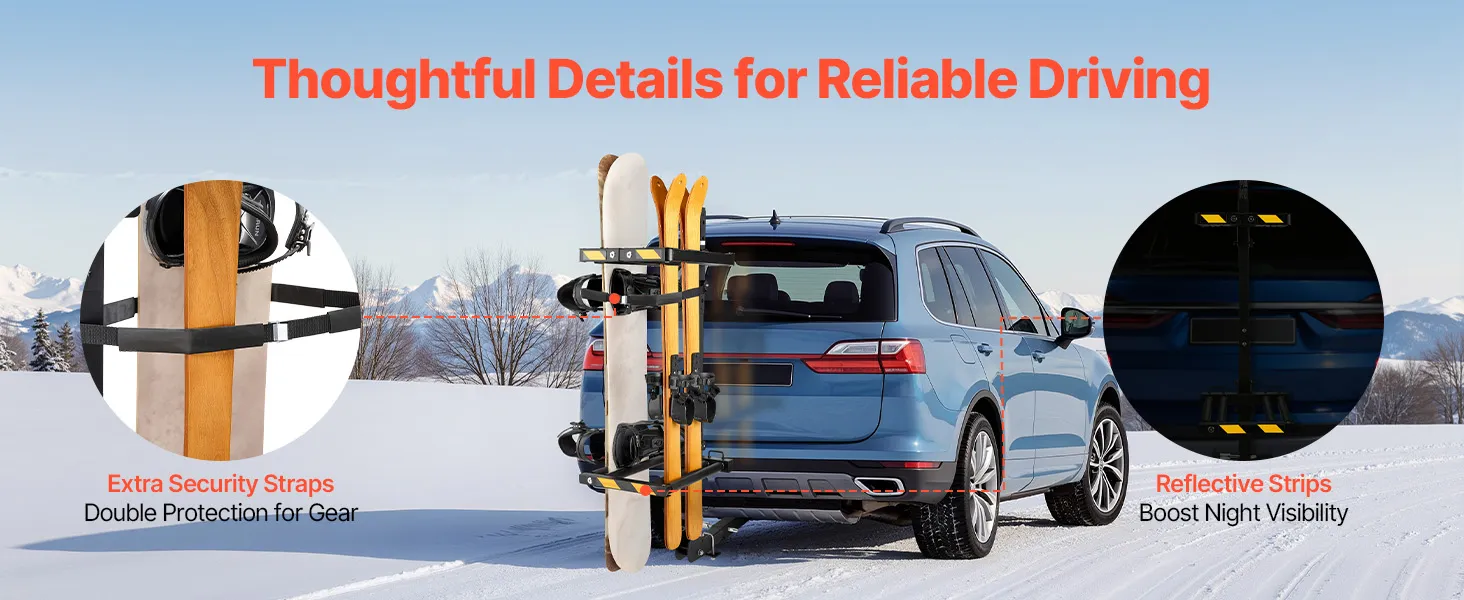
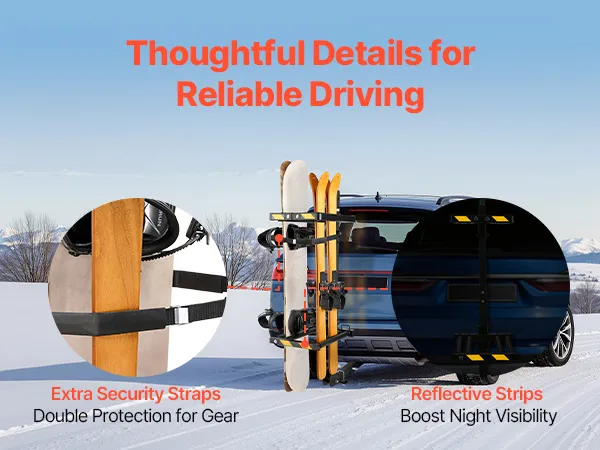
Our lockable ski & snowboard rack includes reflective strips to enhance visibility in the dark, while extra security straps keep your skis stable and secure during transit. With these thoughtful details, enjoy winter outdoor activities with greater peace of mind.
Hitch Mount Ski Rack Carrying Up to 6 Pairs of Skis or 4 Snowboards from a 2-Inch Receiver
This hitch mount ski rack can accommodate up to six pairs of skis or four snowboards in a single load and fits straight into a typical 2-inch hitch receiver. A whole family or a group of friends traveling to the slopes can fit in the six-pair capacity without having to make several trips or pack their belongings inside the car. Ski gear outside the cabin keeps the interior tidy, cozy, and free for travelers and their bags on the way to and from the resort.
The 2-inch receiver is the most common trailer hitch size found on SUVs, trucks, and crossovers used for ski trips. Without making any long-term changes to the car, the rack is easy to install and uninstall. It works equally well as a dedicated ski transport solution for seasonal use and as a multi-purpose hitch rack base throughout the rest of the year.
Hitch Mount Ski Rack with 120° Tilt for Full Trunk Access Without Removing the Rack
Pulling the tilt handle tilts the entire rack downward to 120 degrees, opening the trunk lid or rear hatch fully without removing the rack from the receiver. During a ski trip, frequent access to the trunk is necessary for loading groceries, picking up equipment, and unloading from resort parking lots. A non-tilting rack forces the driver to either detach it at every stop or unload gear before accessing the trunk. The 120-degree tilt eliminates that inconvenience.
The tilt mechanism is designed for vehicles up to 18 feet in length. Drivers should verify their vehicle length before purchasing, as the tilt range is not compatible with longer vehicles, including trailers, campers, and RVs, where the extended rear geometry would prevent full tilt clearance. For standard passenger vehicles and typical SUVs, the tilt function works as intended with no interference from the vehicle body.
Q235 Steel Construction with Thick Rubber Padding Grips Skis Firmly Without Scratching
The hitch mount ski rack's Q235 steel construction provides the rigidity and load capacity to safely support multiple pairs of skis at highway speeds without flexing or deformation. Compared to aluminum or composite equivalents at this price point, steel construction is more resilient to the impacts and leverage stresses that arise when loading skis and snowboards at the conclusion of a full day on the mountain.
Every contact surface between the rack and ski bases, edges, and bindings has thick rubber pads. In addition to reducing metal-on-ski contact that could harm bases and edges, the rubber protects the ski surfaces from vibration and road shock during transportation. Reviewers attest that the cushioning keeps equipment in the same state it left home by keeping skis firmly in place at highway speeds.
Anti-Theft Key Lock Prevents Gear Removal and Resists Accidental Opening at Rest Stops
At parking lots, trailheads, and roadside stops, when the car is left unattended with skis loaded, the rack's clamping mechanism is protected from unwanted removal by the integrated key lock. With a single turn, the lock engages and prevents both forced removal attempts and unintentional opening caused by vibration, which can occur with unsecured spring-loaded systems during lengthy highway journeys.
Even when the user is wearing heavy winter gloves or ski gloves, the lock's large button design enables fast activation. In cold weather, when removing gloves to control a small mechanism is painful and slow, this glove-compatible operation is an important practical detail. At the start and finish of each ski day, the lock can be effectively locked and unlocked without hassle.
Security Straps Provide Additional Stabilization for Gear During Transit on Mountain Roads
Beyond the mechanical clamping system of the rack, the accompanying security straps provide an additional layer of retention for the ski and snowboard load. To avoid lateral movement and vibration bounce, which can cause the skis to come loose from the clamping pads on uneven mountain roads, the straps wrap around the gear and fasten to the rack frame. Compared to smooth highway surfaces, mountain access roads and resort parking lots often feature unpaved stretches and significant road flaws, which increase vibration loads.
In contrast to solo-mechanism racks, mechanical clamping and strap retention operate together to provide redundancy. The straps retain overall load security until the rack is examined and adjusted at the destination, even if road vibration causes the clamping pads to relax significantly during a lengthy drive.
Reflective Strips Improve Rear Visibility in Low-Light and Night Driving Conditions
During dawn departures, dusk arrivals, and nighttime driving on mountain access roads, the rear of the vehicle and rack is more visible to oncoming traffic thanks to reflective strips on the rack body. Early morning departures before sunrise and late returns after dark are common on ski trips.
On narrow mountain roads with little room for overtaking, this safety element is especially important. The reflective components increase the visibility of the rack's overall width at greater distances, providing following drivers with early awareness of the vehicle's full rear width, including the position of the laden rack.
Foldable Design Stores Compactly When Not in Use for Off-Season Convenience
When the ski season is over or the hitch mount ski rack is required for other attachments, the rack folds down to a small size for storage. It is awkward to keep a full-size, non-folding ski rack in a shed or garage for seven or eight months of the year.
If the receiver slot is not being used for anything else during the summer, the rack can stay on the car in its folded position thanks to its fold-down capacity. When folded up, it has a small weight and profile that has no impact on the vehicle's handling or fuel economy during regular driving.
Product guides and documents
User manual-en (PDF) Review
Questions and Answers (0)
Typical questions asked about products: Is the product durable? ...
HXBCDJZDKZDKJ98UK001V0
VEVOR Folding Hitch Mounted Ski & Snowboard Rack, Fits 2-Inch Receiver, Carries up to 6 Pairs of Skis or 4 Snowboards, Adjustable Hitch-Mounted Rack for Car with Key Lock, Security Strap, Tilt Access
0 0 Reviews
£ 125 99
Earn at least 2% points on purchases or save up to 15%.
<span style="color: transparent;">FREE to join</span>
Each when you buy 0+.
Shop
Get -% off for new user
Get £5.00 Off £99.00+ Orders on Your First 3 App Orders.
Download Now

Security & Privacy
100% Secure payment
Secure privacy
FREE Returns
30-day Free Returns
Refund for lost packages / damaged items
Professional Service
12-months warranty
Customer Support
Compare with similar items
Similar Items You Might Like
People Who Bought This Item Also Bought
Best sellers in this category
People Who Viewed This Item Also Viewed
Your Browsing History
Recommended Searches
wall rack mount steel shelf for kitchen shoe rack narrow long shoe rack shelf rack roof rack basket roof rack bag stylish shoe rack shoe rack on wheels rotating shoe rack shoe rack small sliding shoe rack shoe rack for sale bike rack near me roof rack cross bars tiguan roof rack sports rack bike rack kitchen shelf rack best bike rack the bike rack